
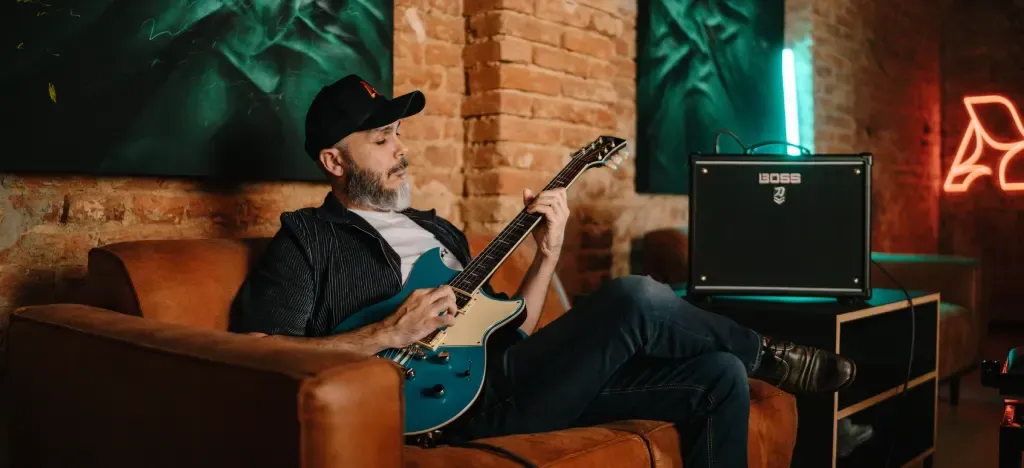
There's a particular kind of satisfaction in playing something you already know how to play. You sound pretty good, nothing goes badly wrong and you can put the instrument down feeling as though you've done some useful practice. I'm as guilty of this as anyone.
I've been playing instruments since I was seven and I've gradually realised that effective music practice is mostly about working on the things you can't play yet. At band rehearsals, that often means stopping because four bars aren't working, then playing them again, slower, until they do.
Practice isn't playing what you can already play. It's spending time on the bits you can't. Here are some practical ways to make that time count.
- Build a good practice routine
- Music practice techniques that work
- Guitar practice tips
- Practice tips for keyboard players
- Vocal practice tips
- Make practice time more effective
- How to keep improving
- 11 common practice pitfalls
- Learn more practical tips with our courses
- About the author
Build a good practice routine

You don't need to practise for hours every day. What matters more is doing it regularly and having some idea what you're trying to achieve when you sit down.
Practise little and often: Fifteen or twenty focused minutes most days will usually get you further than one heroic session on Sunday afternoon. Regular practice also means you spend less time remembering what you did last time.
Keep the music in your head: Practice doesn't only happen with an instrument in your hands. Listen properly to what you're learning, hum the melody or think through a difficult fingering when you're away from the instrument.
Play music you actually like: There's nothing particularly noble about forcing yourself through a piece you hate because you think it's the sort of thing you ought to be learning. Enjoying the music makes it considerably easier to keep coming back to it.
Music practice techniques that work

Once you've actually persuaded yourself to pick up the instrument, a few fairly simple habits can make the time more useful.
Warm up, but don't overdo it: A few scales, arpeggios, stretches or vocal exercises should be enough to get your hands or voice moving. You don't need to turn warming up into half the practice session.
Pay attention to technique: Bad habits have an annoying tendency to become permanent ones once you've practised them a few thousand times. It's much easier to sort out fingering, hand position, posture or breathing early.
Slow down and make it smaller: If four bars keep going wrong, practise those four bars. Play them slowly enough to get them right, then gradually bring them back up to speed.
Listen to yourself: It's surprisingly difficult to hear everything while you're concentrating on playing. Recording yourself can be slightly horrifying, but it will often reveal timing, tuning or technique problems you hadn't noticed.
Notice when something gets better: Progress in music tends to happen in small increments. Yesterday's impossible chord change becoming today's merely awkward one still counts.
Guitar practice tips
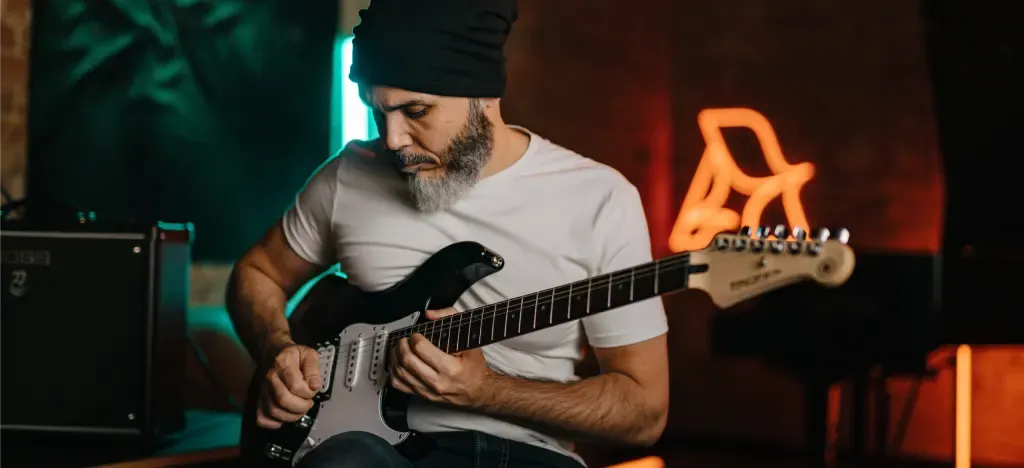
Guitar is particularly good at letting you get away with things. You can learn a handful of chords, start playing songs surprisingly quickly and then discover several years later that you've become extremely good at avoiding the same awkward chord change.
Tune before you start: Practising on an out-of-tune guitar isn't going to do your ear any favours. It takes less than a minute with a tuner.
Warm up your fingers: A few scales, chord changes or simple picking exercises are usually enough. Concentrate on playing them cleanly rather than quickly.
Watch your fretting hand: Use enough pressure to get a clean note, but don't strangle the neck. Pay attention to where your fingers land and whether you're accidentally muting neighbouring strings.
Isolate difficult chord changes: If you're stumbling over the same change every time, stop playing the whole song. Practise moving between those two chords until your fingers start finding the positions automatically.
Use a metronome: It's much easier to convince yourself your timing is fine when there's nothing keeping you honest. Start slowly and increase the tempo once you can play accurately.
Play different kinds of music: Different styles force you to develop different rhythmic, picking and chord skills. You don't have to become a jazz guitarist, but borrowing a few ideas from one won't hurt.
💡 ARTMASTER TIP: Check out our in-depth guides on how to properly tune a guitar and practising with a metronome.
Practice tips for keyboard players

Piano makes it very easy to see what you're supposed to play. Getting both hands to actually do it at the right time is another matter.
Get your hand position right: Keep your hands relaxed and avoid unnecessary tension in your fingers, wrists and shoulders. If something starts hurting, don't simply practise through it.
Practise hands separately: When a passage falls apart with both hands, learn what each hand is doing on its own first. Put them together once neither part requires quite so much thought.
Slow difficult sections down: You don't get extra points for practising at full speed. Reduce the tempo until you can play the section accurately, then increase it gradually.
Loop the difficult bit: Two awkward bars may need ten repetitions. The rest of the piece probably doesn't. Concentrating on the problem saves a lot of time.
Work on rhythm as well as notes: Correct notes played at the wrong time are still wrong. A metronome or backing track can make timing problems much more obvious.
Don't forget expression: Once the notes are under control, pay attention to dynamics, articulation and phrasing. Playing the right keys is only the first part of playing the music.
💡 ARTMASTER TIP: If you're just starting out and not sure whether to choose piano or keyboard, take a look at our guide — Keyboard vs Piano: which should you choose?.
Practise piano with Artie
Artie is our piano learning app built for focused practice. Slow songs down, loop tricky sections, practise each hand separately and use Wait Mode to work through the notes at your own speed.
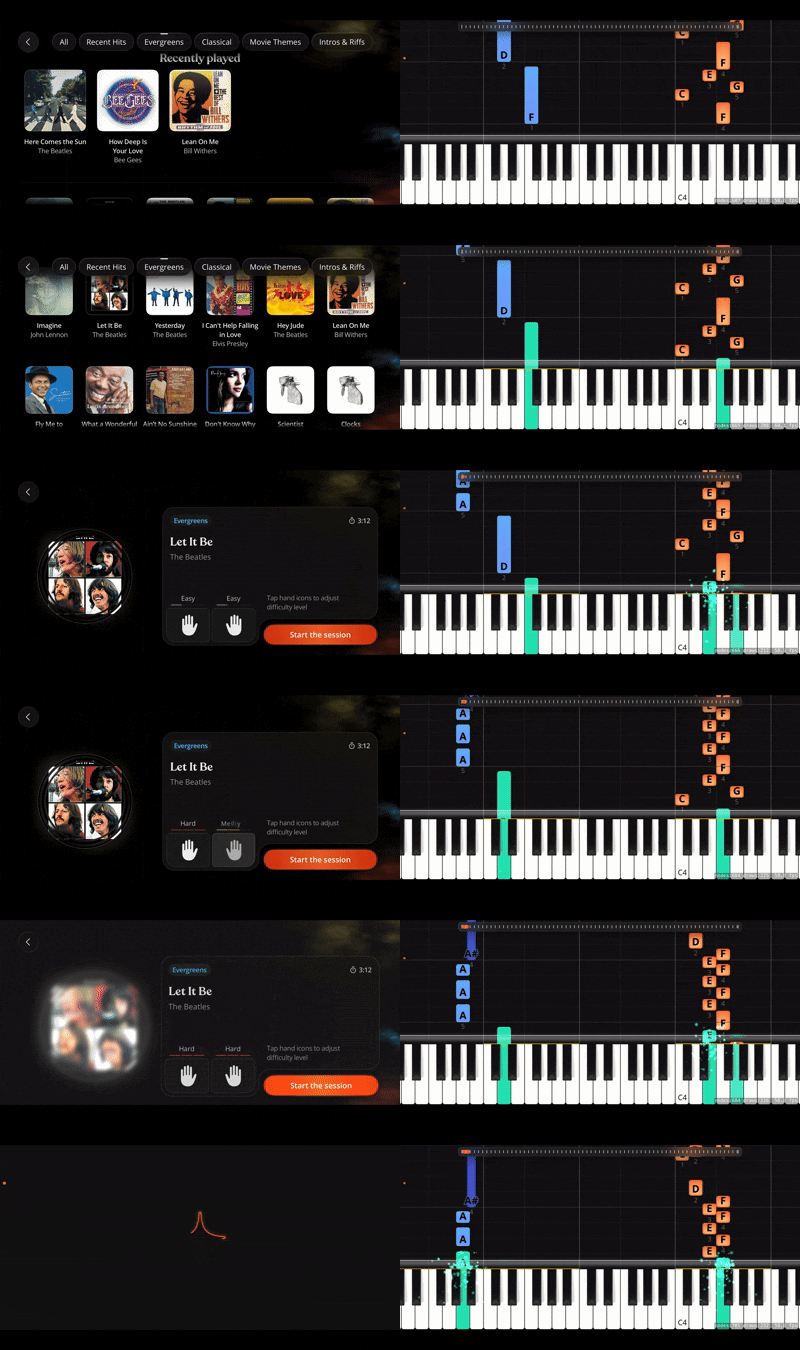 Download Artie on the App Store
Vocal practice tips

Singers have one complication instrumentalists don't: you can't put your voice back in its case and pick up another one if you wear it out.
Warm up gently: Humming, lip trills and comfortable scales can help prepare your voice. A warm-up shouldn't involve immediately seeing how high or loudly you can sing.
Work on your breathing: Good breath control gives you more support and makes longer phrases easier to manage. Practise controlled breathing as well as the songs themselves.
Check your pitch: A piano or tuning app can help you hear when you're consistently landing above or below a note.
Break songs into sections: You don't have to sing from beginning to end every time. Work separately on the phrase, interval or transition that's causing trouble.
Record yourself: Your recorded voice may initially sound like an impostor pretending to be you. Once you get over that, recordings are extremely useful for spotting pitch, timing and phrasing problems.
💡 ARTMASTER TIP: Looking to take your singing to the next level? Check out Stevvi Alexander's comprehensive Singing for Beginners course for expert guidance on vocal technique, breath control, and performance tips.
Make practice time more effective
Once you've established a routine, the next question is what you actually do with the time. A little structure helps, although you don't need to turn every practice session into a project-management exercise.
Have a specific aim: “Practise piano” isn't much of a goal. “Play the left-hand part of these eight bars cleanly at 80 BPM” gives you something you can actually work towards.
Remove obvious distractions: Twenty focused minutes are worth more than an hour interrupted by messages, YouTube and trips to the fridge.
Change your approach: If repeating something isn't helping, do something different. Slow it down, clap the rhythm, practise one hand, play without accompaniment or isolate an even smaller section.
Finish with something you enjoy: Not every minute needs to be spent wrestling with your weaknesses. Ending with a song or piece you can actually play is a good reminder of why you're doing this in the first place.
How to keep improving

Once the basics are reasonably secure, it's easy to settle into playing the same things in the same way. That's comfortable, but it doesn't give you much reason to improve.
Learn some music theory: You don't need to disappear into a textbook. Understanding chords, scales, keys and basic harmony makes it much easier to see how songs are put together and why certain things work.
Try improvising: Start small. Change a melody, play over a simple chord progression or make something up using a handful of notes. Improvisation makes you use what you've learned rather than simply reproduce it.
Try unfamiliar music: Different genres tend to expose different weaknesses. A style you don't normally play might challenge your rhythm, technique, ear or understanding of harmony in ways your usual repertoire doesn't.
Keep finding things you can't quite do: That's usually where the useful work is. If everything you play feels comfortable, it's probably time to add something slightly uncomfortable.Once you have a nice, solid basis, you can build on it. Here are some advanced strategies to help you deepen your understanding and expand your skills:
💡 ARTMASTER TIP: For 10 more skills most players never think to practice, see our guide.
11 common practice pitfalls
A lot of ineffective practice comes down to doing too much of the easy stuff and finding ingenious ways to avoid the difficult stuff. These are some of the most common traps.
Practising inconsistently: One long session every couple of weeks makes it difficult to build on what you've learned. Shorter, regular sessions are generally more useful.
Keeping your instrument packed away: This sounds trivial, but removing even a small obstacle makes you more likely to play. An instrument sitting within reach is much easier to practise than one dismantled in a cupboard.
Practising without a goal: Decide what you want to improve before you start rather than simply playing until you've had enough.
Playing on autopilot: Repeating something isn't automatically practising it. Listen for what needs improving and give yourself something specific to concentrate on.
Forgetting older pieces: Revisit music you've already learned occasionally or you'll be surprised how quickly supposedly permanent knowledge disappears.
Ignoring technique: Repeating poor fingering, posture or breathing doesn't eventually turn it into good technique. It just makes the habit harder to change.
Always playing too fast: Slow practice isn't a punishment. If slowing something down makes it fall apart, that's often a useful sign that you didn't know it quite as well as you thought.
Practising the same way every time: Change the tempo, isolate sections, remove the accompaniment or practise individual parts. A different approach can reveal a problem you've stopped noticing.
Starting again every time you make a mistake: If bar 27 is the problem, starting again at bar one mostly means becoming extremely good at bars 1–26. Start near the problem instead.
Ignoring rhythm: Getting the notes right is only half the job. Count, use a metronome and pay attention to where the notes fall.
Putting both hands together too soon: For instruments such as piano, learning each hand separately can make complicated passages much easier to understand before you combine them.
Incorporating these tips into your routine and keeping a consistent practice schedule, you'll steadily improve your skills. Happy practising!
Learn more practical tips with our courses
There's no single perfect practice routine. The useful one is the one that keeps you playing while still spending enough time on the things you can't do yet.
ArtMaster's courses give you a structured way to develop your technique and musical skills, with courses for piano, guitar, bass, singing and more. If you're learning piano, you can also practise with Artie, using tools such as adjustable tempo, section looping, separate-hand practice and Wait Mode to work through difficult passages rather than simply starting the song again.
Try Our FREE 7-Day Trial!

About the author
Matt Ford is a musician, teacher, writer, and lifelong student of sound. With years of experience in both performing and teaching, he shares practical advice through ArtMaster to help musicians at every level build skill and confidence in their playing.