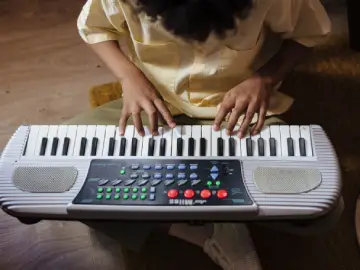
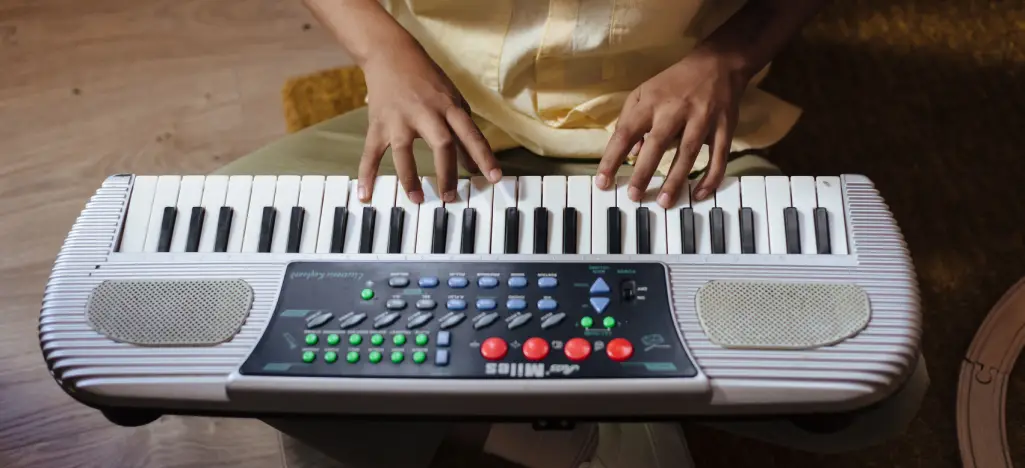
My son is eight, and I keep wondering whether this is the age when music should become part of his life in a more serious way.
He has grown up surrounded by instruments. Keyboards, guitars, recording gear, and various things that make noises they probably weren’t designed to make. He has seen me play in bands. He knows music matters to me.
And yet, he doesn’t seem especially interested.
That is what makes the question difficult. Most children are ready to start learning a musical instrument somewhere between five and eight, but readiness is not just about age. It is about interest, concentration, coordination and how music is introduced. Push too hard and music becomes homework. Wait forever and a child may never discover something that could quietly change their life.
That last part matters to me because I was around seven when music lessons became part of mine. Our class had some kind of musicality test at school, and a few of us were selected for free instrumental lessons. I chose cello, and later had piano lessons too. But I don’t remember having much choice about whether I would learn an instrument at all.
At the time, I wasn’t particularly grateful.
Looking back, I am.
- Quick answer
- Is there a best age to start learning a musical instrument?
- What does the research say?
- What age can children start different instruments?
- Which instrument is best for a child to learn first?
- Is piano a good first instrument for kids?
- Why children quit intrument lessons
- Should you encourage your child to learn an instrument?
- The verdict: when should children start learning an instrument?
- FAQs about children learning musical instruments
- About the author
Quick answer
Most children are ready to start learning a musical instrument between the ages of 5 and 8. However, readiness, interest and the quality of instruction are often more important than age alone.
Is there a best age to start learning a musical instrument?
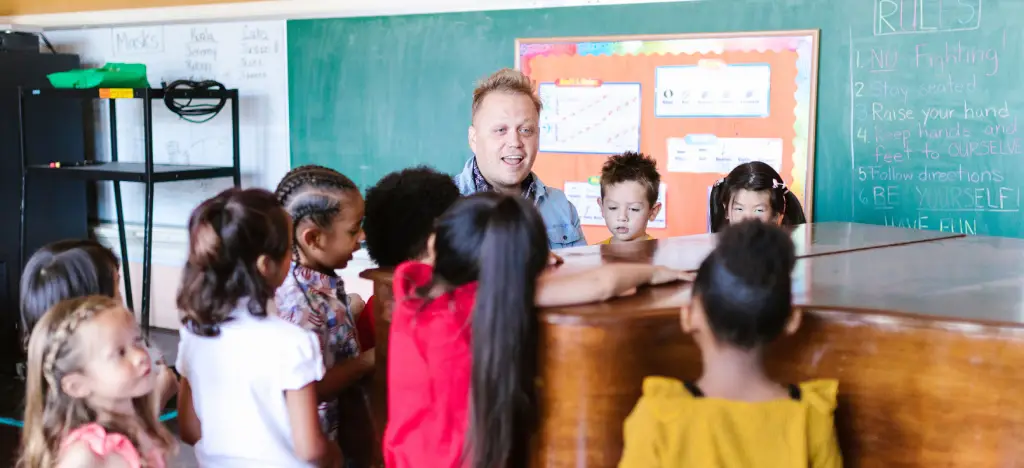 If you search online, you’ll find wildly different answers. Some teachers say children should start at three or four. Others recommend waiting until seven or eight. Read enough of these articles and you start to feel there is some secret musical deadline after which all hope is lost.
Fortunately, there isn’t.
For most children, somewhere between five and eight is a sensible age to begin learning a musical instrument. By this point, many children have enough concentration, coordination and fine motor control to start making real progress.
But age is only part of it.
A curious six-year-old who wants to play will often learn faster than an uninterested nine-year-old who is only there because Mum or Dad signed them up. An enthusiastic ten-year-old beginner can also progress surprisingly quickly.
The real answer is that readiness matters more than birthdays.
What does the research say?
 Research suggests that learning a musical instrument can improve attention, memory, self-control and other important cognitive skills in children. However, there is little evidence that music lessons dramatically increase IQ.
Music is often oversold as a shortcut to genius, which it isn’t. But research does suggest that learning an instrument can support useful cognitive skills.
A 2025 meta-analysis found that music training can improve executive functions in young children, including working memory, self-control, attention and cognitive flexibility.
MIT researchers also found that piano lessons helped young children distinguish subtle differences in speech sounds, suggesting a possible link between music learning and language development.
So no, music lessons won’t magically make a child smarter. But they do combine listening, concentration, memory, coordination and pattern recognition in a way few other activities do.
💡 ARTMASTER TIP: Want to dig deeper into the benefits? We’ve explored this in more detail here: Why learning music is one of the best things your child can do.
What age can children start different instruments?
Not every instrument suits every age. Piano is fairly forgiving because you press a key and it makes the note. Violin is less forgiving because, for a while, it can sound like a household emergency. Guitar can be hard for very small hands. Drums require coordination, space and parents with strong nerves.
As a rough guide:
Instrument | Typical starting age | Why |
|---|---|---|
Singing | Any age | Children can sing naturally before formal lessons |
Piano | 5-7 | Clear visual layout and quick early progress |
Violin | 4-7 | Smaller instruments exist, but it needs patience |
Drums | 5-7 | Good for rhythm and coordination |
Guitar | 6-8 | Small hands can struggle with strings and chords |
Bass guitar | 8+ | Larger instrument with more physical demands |
Music production | 8-12+ | Better once children understand structure and basic technology |
These are not strict rules. They are simply useful starting points.
A child who starts later is not somehow doomed to musical mediocrity. These ages are more about when most children are physically and mentally ready to begin than when they must start.
💡 ARTMASTER TIP: Want to try without committing? If your child already has access to an instrument, ArtMaster has a free 7-day trial, so they can try a few lessons and see whether music feels like something they want to continue.
Which instrument is best for a child to learn first?
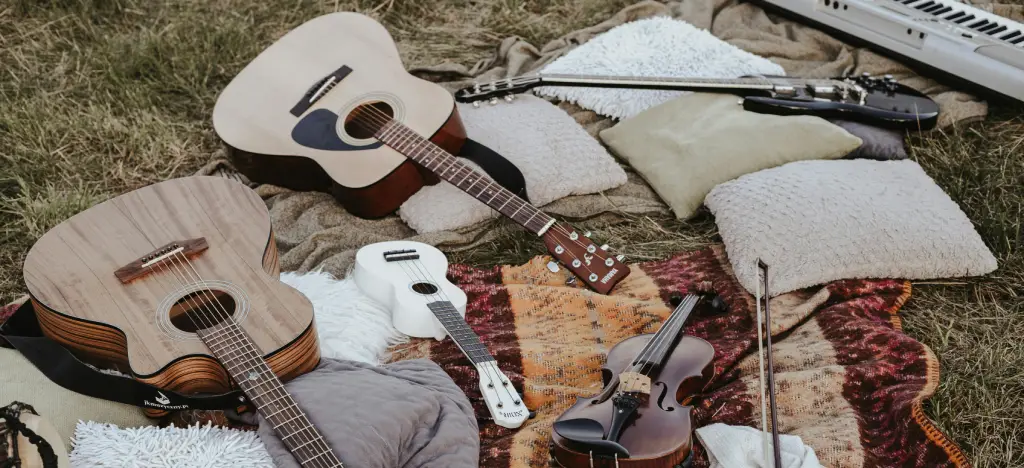 For most children, piano is one of the easiest instruments to start with, but the best instrument is usually the one they are excited enough to keep playing.
This is one of the most common questions parents ask, and unfortunately the answer is the usual parenting classic: it depends.
There is no perfect first instrument. What matters most is finding something that sparks enough curiosity for a child to stick with it beyond the first few weeks.
As a rough guide:
🎹 Piano
Good for children who enjoy patterns and structure. The notes are laid out clearly, simple melodies can be learned quickly and many musical concepts become easier to understand.
🥁 Drums
Good for energetic children with a strong sense of rhythm. They are great for coordination, although they do require space and a certain level of goodwill from everyone else in the house.
🎸 Guitar
A popular choice for children who want to play songs they recognise. Younger children can sometimes struggle with finger strength and hand size, so starting age matters more than with some other instruments.
🎤 Singing
Often overlooked because it feels less formal than learning an instrument. In reality, it may be the most natural place to start.
💻 Music production
A good fit for children who enjoy technology, computers and creating things. It tends to appeal more to older children who are comfortable using software.
🎻 Violin and strings
Often suit children with patience, concentration and a willingness to persevere through a challenging beginner stage.
These are generalisations, not rules. Children have a habit of ignoring our theories and becoming fascinated by whatever they want.
Ultimately, the best instrument is usually the one that makes a child want to come back tomorrow.
💡 ARTMASTER TIP: Still choosing for your child? Our guide to the easiest instruments to learn can help you compare the best beginner options.
Is piano a good first instrument for kids?
Piano is a strong first instrument because children can usually make a recognisable sound quickly. Press a key and the note is there. That early reward matters.
If your child is curious about piano, Artie can make the first steps feel less intimidating. Children can learn real songs, practise one hand at a time, repeat tricky sections and use Wait Mode, where the app waits for the correct note before moving on.
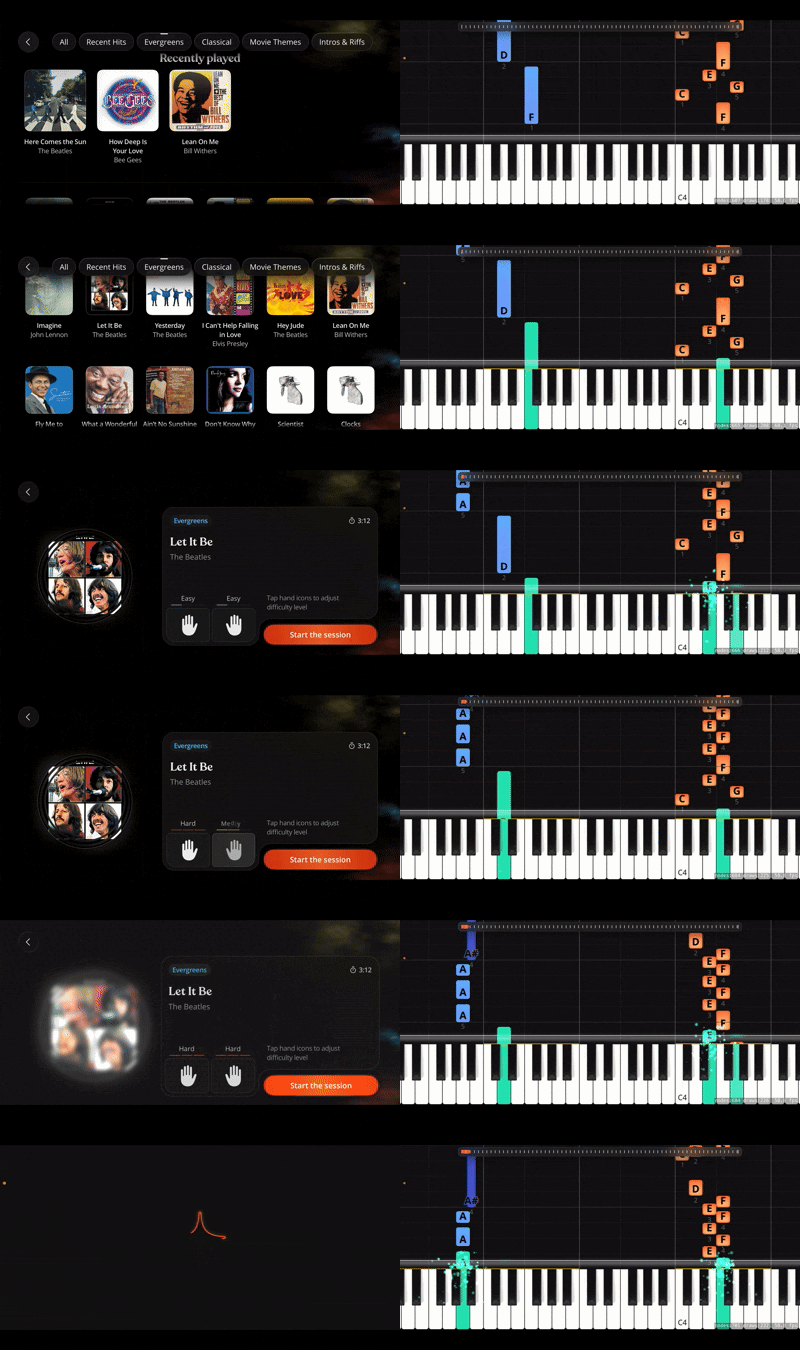 Try Artie for free
Why children quit intrument lessons
 This may be the question parents should ask more often. Not just when should children start, but why do so many stop?
Most children do not quit because they hate music. They quit because music becomes boring, frustrating or too closely associated with being corrected.
Looking back at my own childhood, I can see both sides. Traditional lessons gave me real skills. They also made music feel, at times, like another school subject with strings attached. Literally, in my case.
The danger is that every practice session becomes a small domestic negotiation. Five more minutes. Do it again. Slower. Count properly. No, from the beginning. Before long, music stops feeling like something you make and starts feeling like something you are failing at.
That is when children switch off.
Should you encourage your child to learn an instrument?
 I think so.
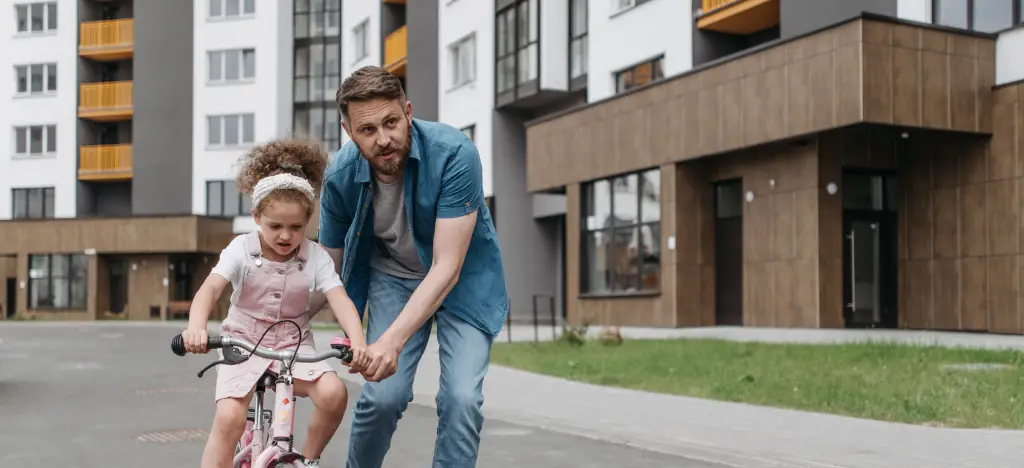
The reason is simple: children cannot always see the long-term value of something when they're seven or eight years old.
If you'd asked me at that age whether I wanted to spend years learning cello, I'm not sure the answer would have been yes. Yet music ended up becoming one of the most important things in my life.
That doesn't mean forcing a child to practise indefinitely. But I do think there is a case for giving music a proper chance before deciding it isn't for them.
A few things that seem sensible:
Set a trial period. Instead of asking a child to commit forever, ask them to commit for three months or a school term.
Keep expectations realistic. Ten minutes of practice is better than daily arguments about thirty.
Let them try different instruments. Sometimes the problem isn't music. It's the instrument.
Focus on songs, not exercises. Most children care more about playing something recognisable than perfecting a scale.
Expect a dip in enthusiasm. Nearly every skill becomes less exciting once the novelty wears off.
The difficult part is knowing when a child genuinely dislikes something and when they are simply experiencing the normal frustration that comes with learning.
As a parent, I don't think my job is to make every challenge disappear. Sometimes it is to help a child stay with something long enough to discover why it might be worth doing.
That is very different from forcing them forever.
The verdict: when should children start learning an instrument?
For most children, somewhere between five and eight is a sensible starting point.
But after writing this article, I'm not convinced age is the most important part of the question.
As a parent, I find myself thinking less about whether my son should start at eight, nine or ten, and more about how to help him discover whether music is something he might enjoy in the first place.
Looking back, I don't remember many of the scales I played as a child. I don't remember much of the theory either.
What I do remember is that music eventually became mine.
It stopped being lessons and became something I did because I wanted to.
That probably didn't happen the day I picked up a cello. It certainly didn't happen because I was the perfect age.
It happened because somebody opened the door, and music stayed around long enough for me to discover what was on the other side.
If you're wondering whether your child should learn an instrument, that may be the most useful thing to remember.
The goal isn't to find the perfect age. It's to give them the opportunity.
FAQs about children learning musical instruments
What age should a child start learning a musical instrument?
For most children, somewhere between five and eight years old is a sensible age to begin learning an instrument. However, readiness is often more important than age alone. Interest, concentration and coordination all play a role.
Can a 4-year-old learn a musical instrument?
Yes. Many children start learning music at four, particularly piano, violin or singing. At this age, lessons are often more playful and focused on exploration rather than formal practice.
Is 8 years old too late to start learning an instrument?
Not at all. Many children start at eight, nine or even later and make excellent progress. Older children often have longer attention spans and can practise more independently.
What is the easiest instrument for a child to learn?
There is no single easiest instrument, but piano is often considered one of the most beginner-friendly because children can produce notes immediately and start playing simple songs quite quickly.
Should parents encourage children to learn an instrument?
In most cases, yes. Children do not always recognise the long-term value of a skill when they first begin. Gentle encouragement can help them get through the beginner stage, but there is a difference between encouragement and constant pressure.
How long should a child practise an instrument each day?
For beginners, 10–15 minutes a day is often enough. Short, regular practice sessions tend to be more effective than occasional long sessions.
What if my child wants to quit music lessons?
A temporary loss of enthusiasm is normal. Before quitting completely, it can be worth trying a different teacher, instrument, learning method or type of music. Sometimes the problem is not music itself, but the way it is being taught.
About the author
Matt Ford is a musician, writer and father based in Prague. He writes about music learning, creativity and technology for ArtMaster.