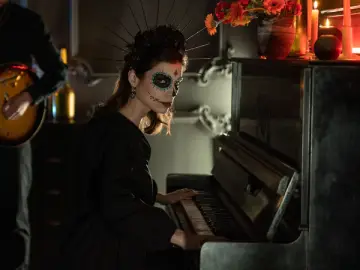
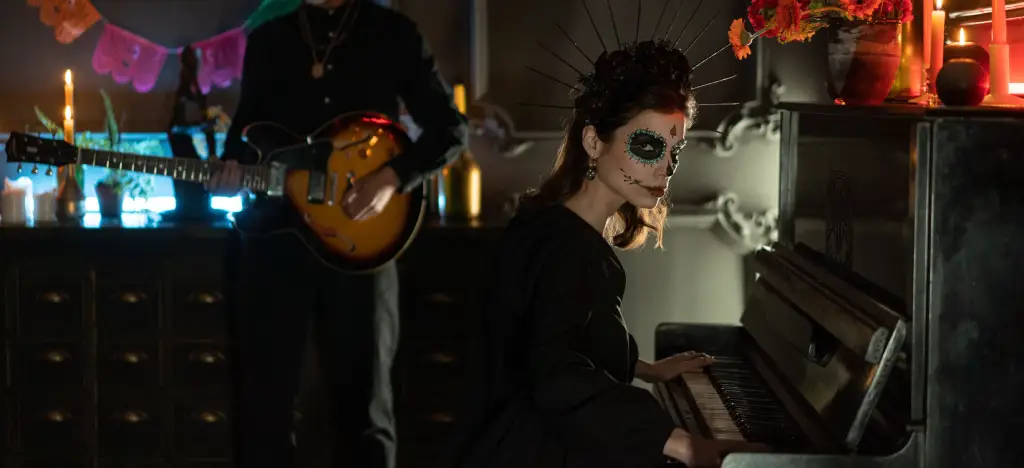
There's something about the piano that suits Halloween. A few notes played high up on the keyboard can be more unsettling than an entire orchestra, while a dramatic chord played at the right moment can make even a harmless tune sound sinister.
The beauty of Halloween is that it can be frightening, funny, childish or downright ridiculous, sometimes all at once. And the music is no different. Horror themes, dark classical pieces and viral novelty songs are an unlikely mix, but somehow they've all made it onto our list this 'spooky season'.
- 1. Halloween theme – John Carpenter
- 2. Toccata and Fugue in D minor – attributed to J.S. Bach
- 3. Hedwig's Theme – John Williams
- 4. This Is Halloween – Danny Elfman
- 5. In the Hall of the Mountain King – Edvard Grieg
- 6. Spooky Scary Skeletons – Andrew Gold
- 7. Moonlight Sonata – Ludwig van Beethoven
- 8. The Addams Family theme – Vic Mizzy
- 9. Funeral March – Frédéric Chopin
- 10. Welcome to the Black Parade – My Chemical Romance
- Which Halloween piano songs are easiest for beginners?
- Nine extra piano songs are free in Artie this Halloween
- Frequently asked questions
- About the author
1. Halloween theme – John Carpenter
John Carpenter's theme for his 1978 film Halloween is definitive proof that sometimes less is more. A handful of notes, a repetitive rhythm and some ominous bass sounds were enough to create one of the most recognisable horror themes ever written.
Part of what makes it so unsettling is the unusual 5/4 time signature. Instead of the familiar four beats to a bar, there are five, giving the music a slightly awkward, off-balance feel. Carpenter apparently borrowed the rhythm from his father, a music teacher who had taught it to him on a pair of bongos when he was thirteen.
It's not an especially difficult piece to play, at least on paper. The right hand repeats a relatively simple pattern while the left provides those low, threatening notes. The real challenge is keeping that five-beat rhythm absolutely steady. Get it right, and you don't need to do much else to make the music work.
2. Toccata and Fugue in D minor – attributed to J.S. Bach
There was a time when almost any film featuring an abandoned castle, a mad scientist or a mysterious figure playing an enormous organ was obliged to include a few bars of Toccata and Fugue in D minor.
It's become musical shorthand for horror, quite an achievement for a piece written centuries before cinema. The work is traditionally attributed to Bach, although some musicologists have questioned whether he actually composed it.
The complete work is demanding, particularly the fugue, where several independent musical lines are woven together. But the famous opening can be learnt separately. Concentrate on the opening flourish and descending passage before tackling the more complicated sections.
You can learn Toccata and Fugue in D minor for free over Halloween with Artie, our piano learning app. There's also a complete video tutorial below to help you get started. 👇
3. Hedwig's Theme – John Williams
John Williams could probably have introduced Harry Potter with a large orchestra playing at full volume. Instead, he chose a celesta, a keyboard instrument with a delicate, bell-like sound, to open Hedwig's Theme.
It's an inspired choice. Those first few notes immediately suggest a world of magic and mystery, and the melody has become almost inseparable from the Harry Potter films.
Williams gives the melody a slightly mysterious, unpredictable feel, which is part of what makes it so memorable. It sounds effortless, but isn't quite as easy to play as you might think. Start with the right-hand melody, paying particular attention to the rhythm before adding the accompaniment.
Hedwig's Theme is also free to learn in Artie for Halloween.
 Try Artie for free
4. This Is Halloween – Danny Elfman
Danny Elfman has a remarkable ability to make music sound sinister and ridiculous at the same time. His work with Tim Burton is full of that combination, and This Is Halloween, from The Nightmare Before Christmas (1993), is one of the best examples.
The song introduces the inhabitants of Halloween Town, each taking a turn to explain their contribution to the festivities. Musically, it's a mixture of theatrical singing, marching rhythms and sudden changes of mood.
That variety makes it entertaining but less straightforward to play. Break it into short phrases and learn the different rhythmic patterns separately.
💡 ARTMASTER TIP: Want to learn This Is Halloween? You can find MIDI arrangements on MuseScore and import one into Artie. Our guide to learning piano songs with MIDI files explains how.
5. In the Hall of the Mountain King – Edvard Grieg
Few composers have managed to get quite so much mileage out of one short melody as Edvard Grieg.
He wrote In the Hall of the Mountain King in 1875 for Henrik Ibsen's play Peer Gynt. In the scene, Peer finds himself surrounded by increasingly agitated trolls. Grieg tells the story almost entirely through repetition.
The music begins quietly with a simple melody. Then it repeats. And repeats again. Each time, it gets faster and louder until the whole orchestra is racing towards a chaotic conclusion.
Simplified piano arrangements are good for beginners because there's relatively little material to learn. Take a look at it played in Artie below.
6. Spooky Scary Skeletons – Andrew Gold
Andrew Gold was a successful singer, songwriter and session musician long before he became the unlikely patron saint of dancing internet skeletons.
He worked with Linda Ronstadt and wrote Thank You for Being a Friend, later adopted as the theme to The Golden Girls. In 1996, he released a children's album called Halloween Howls, which included Spooky Scary Skeletons.
For years, it was simply a novelty record. Then the internet discovered it, and remixes and dancing skeletons turned it into an annual event.
Musically, it's a cheerful affair, with a jaunty melody and bouncing accompaniment. Get the left-hand rhythm comfortable first, then add the melody without losing that bounce. It's probably the least frightening song on the list.
💡 ARTMASTER TIP: Find a MIDI version of Spooky Scary Skeletons that you can import into Artie. Once it's in the app, you can practise each hand separately, slow it down and repeat the tricky bits as often as you need.
7. Moonlight Sonata – Ludwig van Beethoven
Beethoven never called this piece Moonlight Sonata. He published it in 1802 as Sonata quasi una fantasia, and the familiar nickname appeared after his death, when the writer Ludwig Rellstab compared the first movement to moonlight over Lake Lucerne.
It's a rather romantic description for music that I've always found quite troubled. The first movement unfolds slowly in C-sharp minor, with a continuous pattern of three notes above a deep, shifting bass.
You can see how it all comes together in the piano demonstration below. For a closer look at the notes and how to practise them, see our Moonlight Sonata piano guide.
8. The Addams Family theme – Vic Mizzy
Two finger snaps. That's all it takes for most people to recognise the theme from The Addams Family.
Vic Mizzy wrote it for the original 1964 television series, giving it a wonderfully peculiar sound built around a harpsichord, bass clarinet and those famous snaps. An unusual combination, although the Addams family were hardly a conventional household.
The melody is short, memorable and well suited to beginners. The real fun is in the rhythm. Keep the notes short and crisp, and leave proper gaps for the snaps. Playing everything too smoothly rather defeats the point.
You'll probably need somebody else to do the snapping while you're playing.
💡 ARTMASTER TIP: Want to try The Addams Family theme in Artie? There's several versions on MuseScore that you can check out. If you download one as a MIDI file, you can import it into Artie and practise at your own pace.
9. Funeral March – Frédéric Chopin
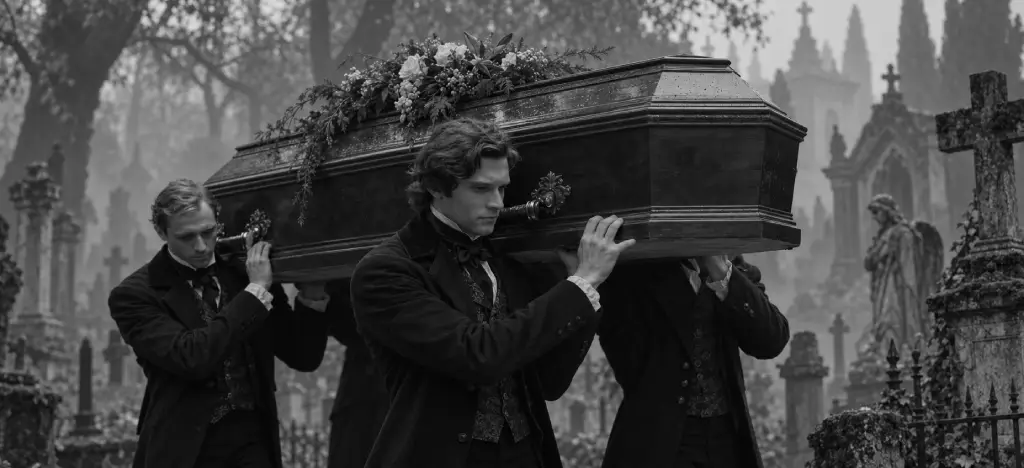
Chopin's Funeral March is one of those pieces almost everybody knows, even if they couldn't tell you who wrote it. Play those first few heavy chords and people immediately know somebody has died, at least in the world of cartoons and old films.
It's actually the third movement of Chopin's Piano Sonata No. 2 in B-flat minor. He wrote the march in 1837, two years before completing the rest of the sonata, and it was performed at his own funeral in 1849.
What makes it particularly effective is the contrast. The opening is heavy and solemn, but the middle section becomes unexpectedly gentle and lyrical before the march returns.
The opening can be tackled in a simplified arrangement. Keep the rhythm measured without allowing it to drag. The spaces between the chords are just as important as the notes.
10. Welcome to the Black Parade – My Chemical Romance
Few piano introductions are as instantly recognisable as the opening of My Chemical Romance's Welcome to the Black Parade. It starts with a solitary note, repeated almost hesitantly, before building into one of the biggest alternative rock anthems of the 2000s.
Released in 2006, the song is the centrepiece of The Black Parade, a concept album dealing with death, memory and loss. It might not have been written for Halloween, but it certainly belongs alongside the more traditional ghosts and monsters.
The opening is an excellent choice for beginners. It's slow, uses relatively few notes and gives you something recognisable to play almost immediately.
💡 ARTMASTER TIP: If you like the opening of Welcome to the Black Parade, you'll find plenty more worth learning in our collection of 40 iconic piano intros.
Which Halloween piano songs are easiest for beginners?
The introduction to Welcome to the Black Parade is probably the easiest starting point. It uses relatively few notes, and you can get something recognisable under your fingers without weeks of practice.
The Addams Family theme and a simplified In the Hall of the Mountain King are also good choices. Both use memorable melodies, although getting the rhythm right takes some attention.
For players with more experience, Hedwig's Theme and the first movement of Moonlight Sonata offer a greater challenge. Neither needs to be played particularly fast, but both require more control than they initially appear to.
💡 ARTMASTER TIP: If you're after something a little less frightening, we've also put together 20 easy piano songs for beginners.
Nine extra piano songs are free in Artie this Halloween
Fancy playing something suitably dark and dramatic this Halloween? We've made nine extra songs free in Artie, our piano learning app. Some are Halloween favourites, others have no business being on a Halloween playlist, but sound rather good there anyway.
Moonlight Sonata – Beethoven
Toccata and Fugue in D minor – J.S. Bach (attributed)
Hedwig's Theme – John Williams
Welcome to the Black Parade (intro) – My Chemical Romance
Lux Aeterna – Clint Mansell (Requiem for a Dream)
Game of Thrones Theme – Ramin Djawadi
Schindler's List Theme – John Williams
Once Upon a Time in the West – Ennio Morricone
River Flows in You – Yiruma
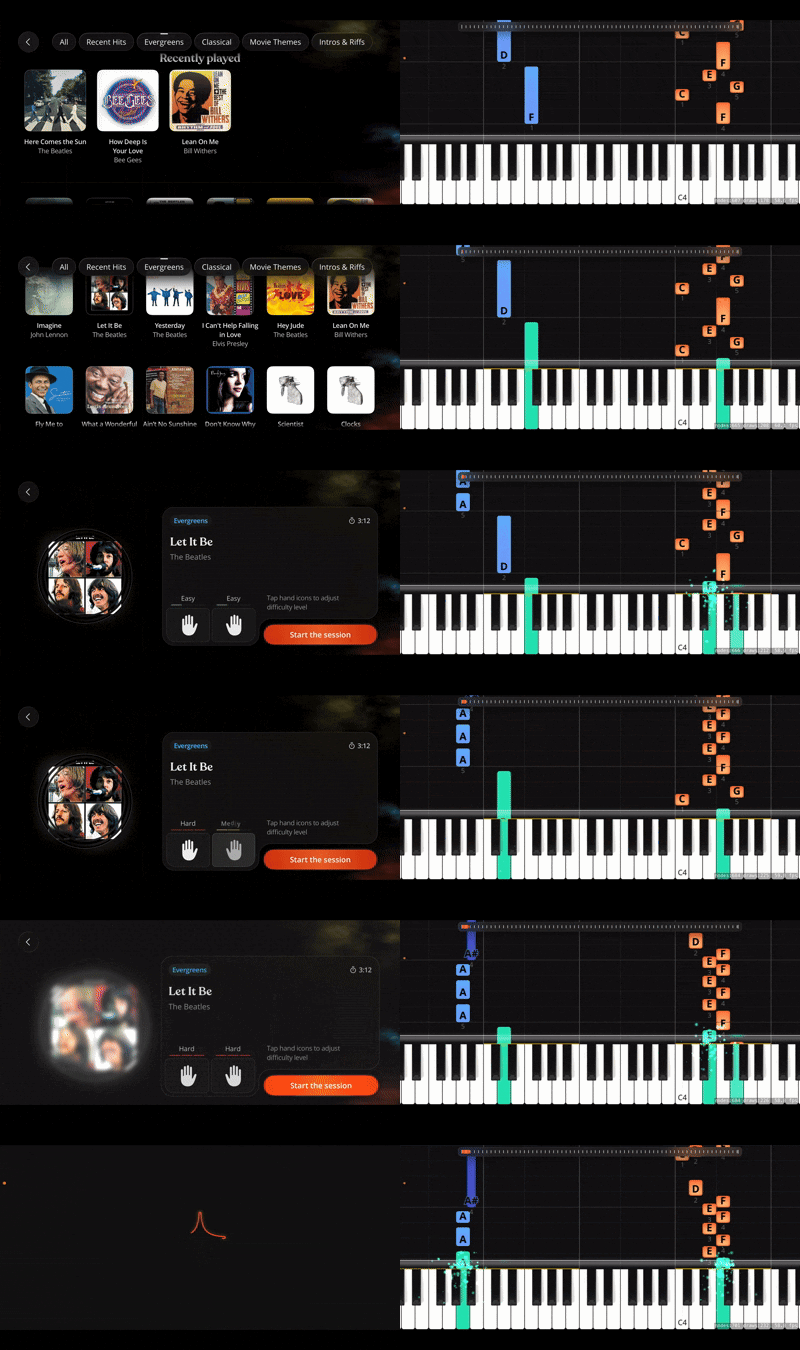
All you need is a piano or keyboard and your iPhone or iPad. Artie shows you which notes to play, listens as you play them and lets you tackle the music a bit at a time. No sheet music required.
Frequently asked questions
What are the easiest Halloween piano songs to play?
The intro to Welcome to the Black Parade, the Addams Family theme and simplified versions of In the Hall of the Mountain King are all good choices for beginners. They're recognisable without requiring advanced technique.
What is the famous scary organ music?
It's usually Toccata and Fugue in D minor, BWV 565, traditionally attributed to Johann Sebastian Bach. Its dramatic opening has been used in countless films, television programmes and cartoons.
Can you learn a Halloween piano song in two weeks?
A short, simplified piece is a realistic goal for many beginners with regular practice. More complicated arrangements and full classical works generally take considerably longer.
About the author
Matt Ford – Musician and writer for ArtMaster
I've been playing music since I was seven, starting with classical cello before picking up the guitar and eventually getting into synthesisers and electronic music. I've played in various bands over the years and studied sound engineering and music technology along the way.
I now write about music and learning instruments for ArtMaster, drawing on more than 40 years of playing, performing and occasionally making a terrible racket.