
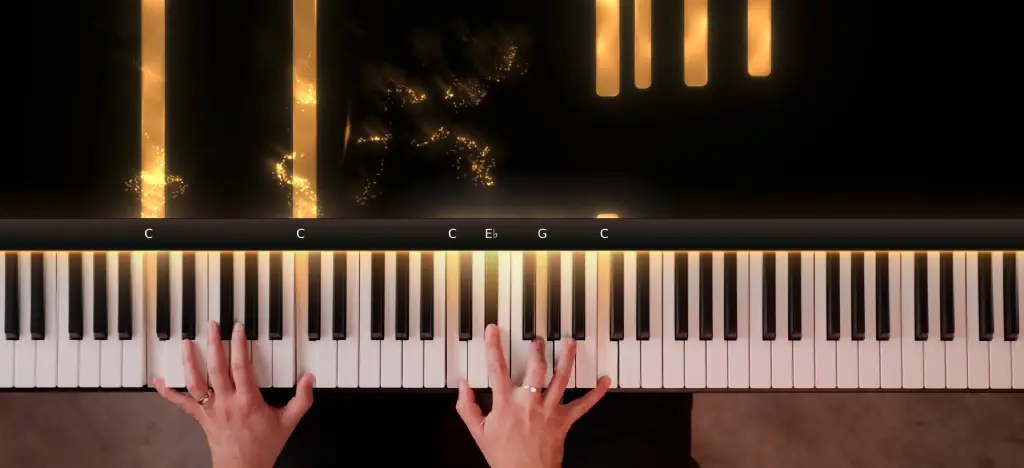
If traditional sheet music has ever made you feel stuck, you’re defintely not the only one.
Treble clef, bass clef, sharps, flats, key signatures, two hands doing completely different things — it can feel like the piano has turned into a maths exam before you’ve even played anything that sounds like music.
The truth is simple: you do not need to read sheet music to start learning piano.
You can learn piano through chord symbols, falling notes, video tutorials, ear training, visual patterns, piano apps and plain old repetition. Sheet music is useful. It is not evil. It is not a conspiracy. But it is not the only way into music.
In fact, for many beginners, putting sheet music to one side for a while might be the thing that finally makes piano feel possible.
- Quick answer: can you learn piano without reading sheet music?
- My experience of reading piano sheet music
- What is sheet music, and why do people use it?
- Are there other ways to read music?
- 1. Piano chord symbols
- 2. Grid-style visual notation
- 3. Falling-block notation
- 4. Piano roll notation (in DAWs)
- Learn piano by ear
- Learn by watching and copying
- How Artie helps you learn piano without sheet music
- Sheet music vs other ways of learning piano
- So, how can beginners actually learn without sheet music?
- So, Is it better to learn piano with or without sheet music?
- FAQs: Learning piano without sheet music
Quick answer: can you learn piano without reading sheet music?
Yes. You can learn piano without reading sheet music by using chord symbols, falling notes, video tutorials, ear training and interactive piano apps.
Traditional notation is useful, especially for classical music, exams and formal arrangements, but beginners do not need it on day one. Many people learn piano by recognising patterns, copying hand movements, playing chords, listening carefully and repeating songs slowly until the movements start to feel natural.
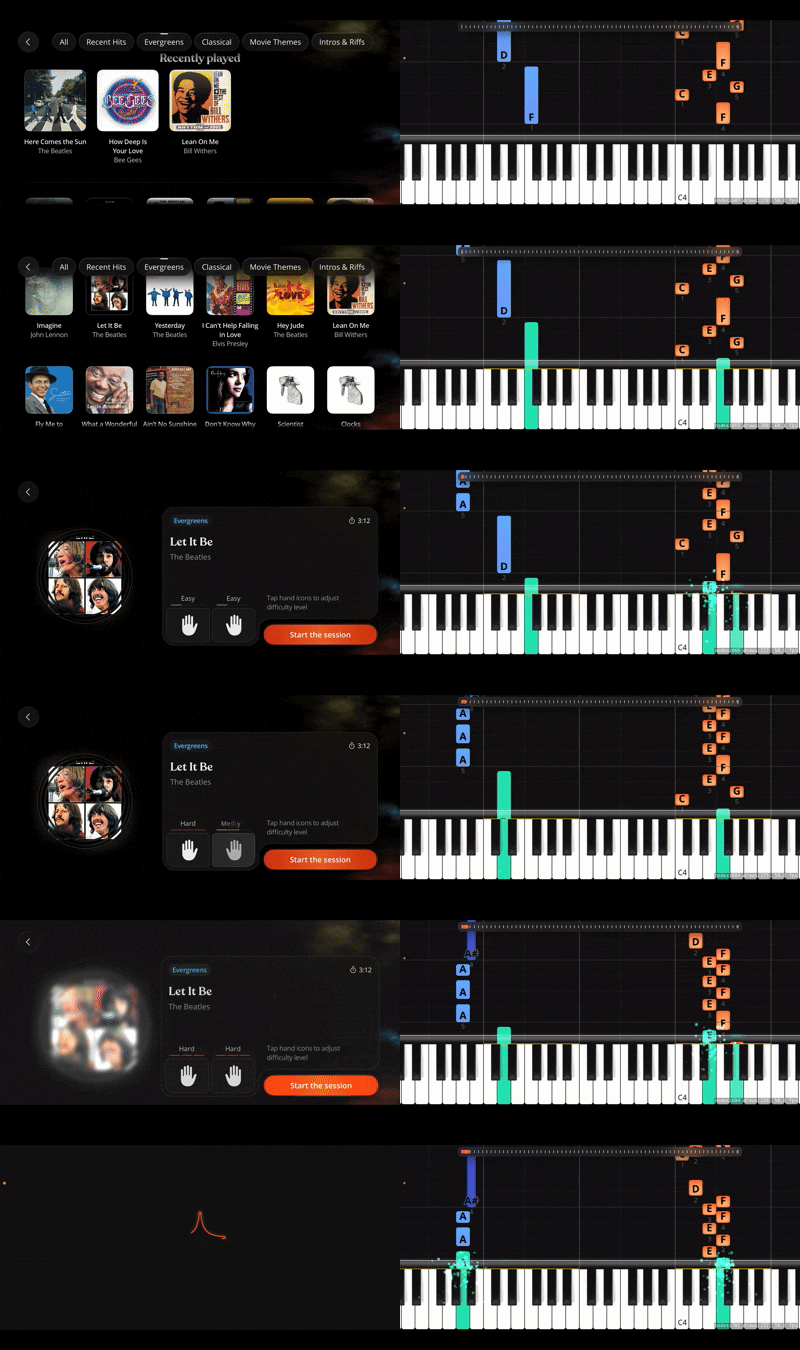
Artie is an AI piano teacher app from ArtMaster that helps beginners learn real songs on piano using falling notes, Wait Mode, looped practice sections, one-hand practice and feedback after playing. It is designed for people who want to start playing without having to read traditional sheet music first.
That does not mean you should never learn sheet music. It means it does not have to be the locked door standing between you and the instrument.
My experience of reading piano sheet music
I started learning music at a young age, playing the cello.
Reading one line of music made sense to me. It wasn’t always easy, but it was manageable. One line. One instrument. One melody. Fine.
Then I switched to piano and hit a wall. Suddenly I was expected to read two lines at once: one for the left hand, one for the right. It felt like trying to read two different books at the same time while also operating a small machine.
I kept at it for years, thinking it would eventually click. But it never really did. I could read music, yes, but slowly. Awkwardly. Never fluently. And it made playing piano feel like hard work before it felt like fun.
When I finally let go of the idea that I had to read sheet music in order to enjoy the piano, something shifted. I started focusing on chords, patterns, hand shapes and muscle memory. Piano finally became something I wanted to sit down and play, rather than something I felt I had to decode.
That’s the important distinction. Reading music and making music are connected, but they are not the same thing.
What is sheet music, and why do people use it?
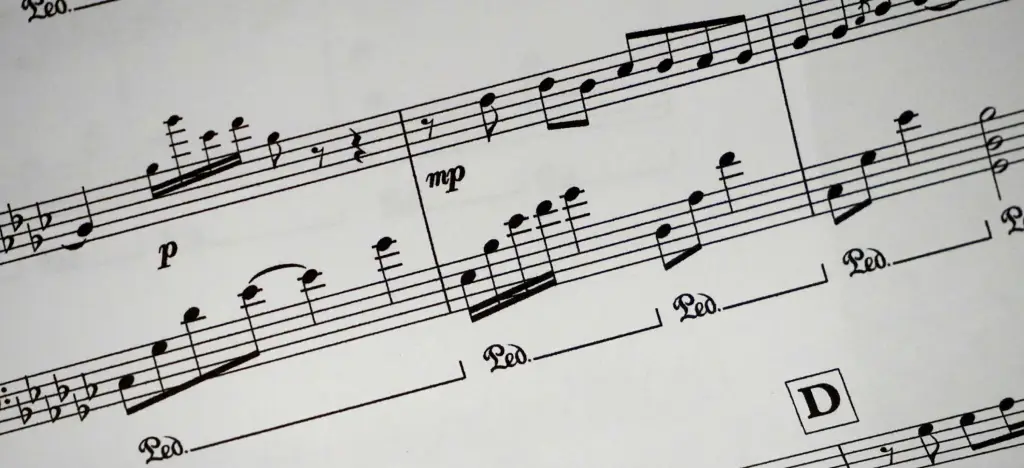 Sheet music is a way of writing music down. It tells you which notes to play, when to play them, and how long to hold them. It’s incredibly precise — and essential if you’re playing classical music or accompanying a singer from a score.
But for beginners, sheet music can feel like a mountain to climb. It’s not just the note names — it’s the rhythm, the key signatures, the dynamic markings, and the need to read two staves at once (one for each hand). It can be mentally exhausting. And for many learners, it ends up being a barrier rather than a bridge.
Are there other ways to read music?
Yes. And many of them are much more beginner-friendly.
There are several ways to understand, follow or learn music without reading traditional notation. Some are simple. Some are visual. Some are based on listening. Some are built into modern piano apps.
None of them has to replace sheet music forever. But they can help you start playing sooner.
1. Piano chord symbols
This is by far the most common alternative. Instead of reading every individual note, you just read the names of the chords — C, Am, F, G7, and so on — and play them in whatever rhythm fits the song. You might see the chord names written above or below the lyrics, or simply jotted down on a page.
Let’s take the classic song Let It Be by The Beatles. You don’t need full sheet music to play it. With just the chord names, you can play along and sing:
📝 Example:
🎶 Let it be, let it be, let it be, let it be
    C          G          Am         F
It’s fast to learn, easy to remember, and makes it simple to play thousands of songs.
2. Grid-style visual notation
This system has become really popular thanks to teachers like David Bennett, who create beginner-friendly arrangements that show exactly what to play, without using standard notation. The notes are written using letter names, stacked vertically to show when they’re played together. Chords are written underneath, and the layout reflects the timing and rhythm visually.
It’s clear, intuitive, and ideal for adult learners — especially those coming from a guitar or songwriting background. You can see both hands at a glance, and there’s no need to interpret clefs or accidentals.
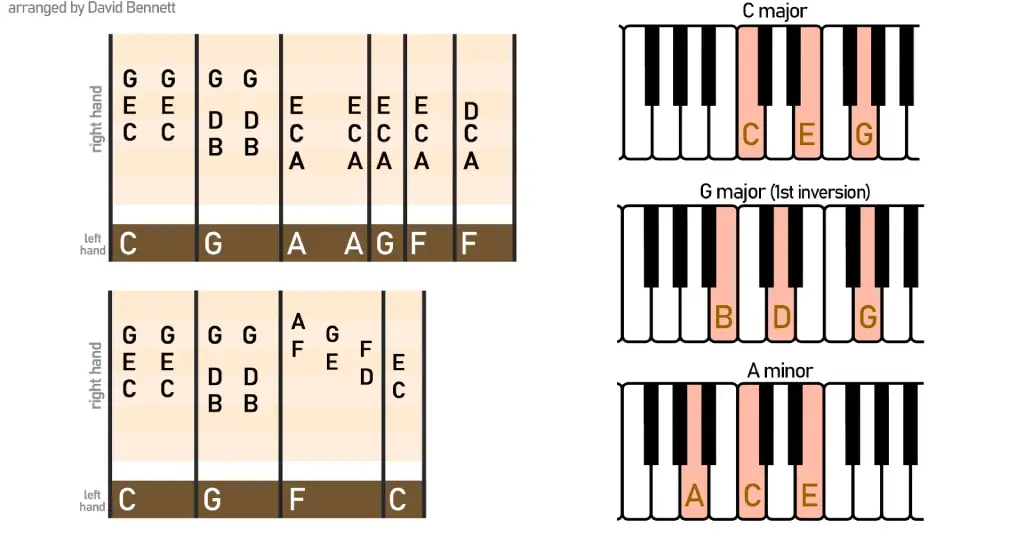 💡 ARTMASTER TIP: For a step-by-step guide to playing Let It Be using this method, including a free video tutorial, check out our guide — Beginner-friendly songs to learn on piano
3. Falling-block notation
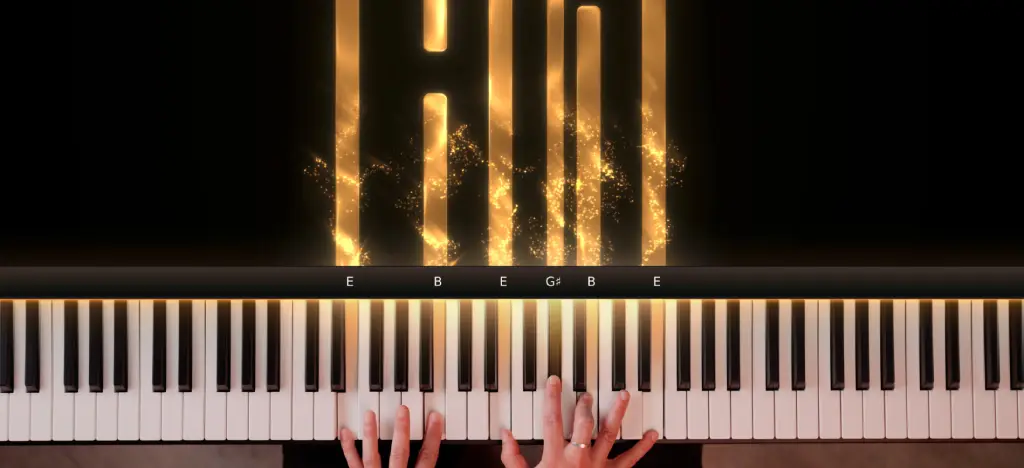
You’ve probably seen this system in apps like Synthesia, Flowkey, and Simply Piano — and it’s the exact approach we use at ArtMaster with our Artie piano app
Notes fall down the screen in colourful blocks, landing on a visual keyboard. You press the key when the block lands. Longer blocks mean you hold the note longer. It’s clear, immediate, and you don’t need to read anything — you just react.
It’s especially effective for beginners and visual learners. Plus, it helps develop timing and coordination naturally.
4. Piano roll notation (in DAWs)
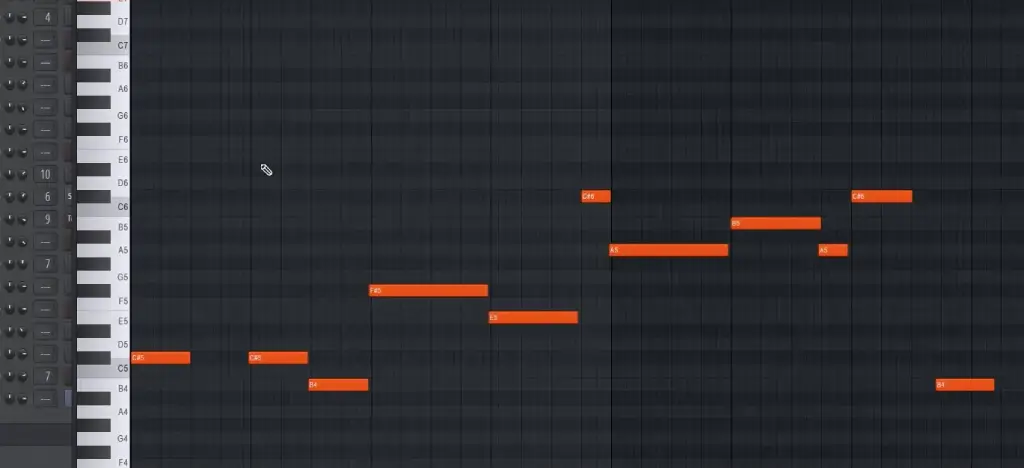
If you’ve ever tried making music in GarageBand, Logic, or Ableton, you’ve seen this one. Notes are shown as horizontal bars on a grid — higher notes are placed higher on the screen, longer notes are stretched further sideways.
This system is great for editing music digitally, writing your own parts, or understanding how a piece is built. It’s not often used to teach beginners, but it’s a powerful way to work once you start creating your own music.
 💡 ARTMASTER TIP: Working in a DAW and want your piano to sound more realistic? Check out our Piano for Producers course — it’s designed to help you create expressive, professional-sounding parts
Learn piano by ear
You don’t have to see music to understand it — you can hear your way into it. Learning by ear means listening closely to a melody or chord progression, figuring out the notes on your own, and memorising patterns over time.
Start with simple songs, slow them down with tools like Transcribe, Moises, or YouTube’s playback speed control. Try to pick out melodies note by note, or spot when the chord changes. You don’t have to get everything right — the act of listening and experimenting is how you build your musical instincts.
💡 ARTMASTER TIP: Artie, our AI teacher, is designed to support this approach. He gives real-time feedback on what you actually play — not what’s written — which means you can develop your ear while still getting helpful guidance.
📚 And the science backs it up:
Research shows that many popular pianists learn by ear, studying recordings rather than using sheet music.
A review in Music Educators Journal calls ear playing a foundational skill — essential for memory, improvisation, and playing in bands or ensembles.
Studies also show that ear-trained piano players develop stronger coordination between hearing and movement, and are less thrown off by timing errors (a study by McGill university).
In blues, jazz, folk, and Indian classical music, ear learning isn’t the exception — it’s the tradition.
Learn by watching and copying
For many people, sheet music feels cold and abstract — but watching someone else’s hands just makes sense. That’s why video tutorials are so popular: you can see where to put your fingers, how the hands move, and hear how it should sound.
Whether you’re following along with a YouTube cover or a structured video course, copying visually is one of the fastest and most natural ways to get started. No reading, no theory — just imitation and repetition.
💡 ARTMASTER TIP: Our courses at ArtMaster are built around this idea — everything is visual, slow, and practical, so you can learn songs by watching and doing.
How Artie helps you learn piano without sheet music
Artie is ArtMaster’s AI piano teacher app for beginners who want to learn real songs without starting from traditional notation.
Instead of putting a score in front of you, Artie uses falling notes and guided practice. You can learn one hand at a time, slow sections down, loop difficult parts and use Wait Mode so the song waits while you find the right notes.
That last part is especially useful.
In a normal video tutorial, the video keeps going whether you are ready or not. In Artie’s Wait Mode, the app waits for you to play before moving on. That makes practice feel less like chasing a moving train and more like working through the music at your own pace.
Artie also lets you ask questions while you practise, which makes it different from a passive app or video lesson. If you are stuck, you are not just left with a replay button and the quiet suspicion that everyone else is finding this easier than you.
What Artie can help with
Artie can help beginners:
learn real piano songs without reading sheet music
follow falling notes visually
practise one hand at a time
slow down difficult sections
loop tricky parts
use Wait Mode so the song waits while they play
get feedback after practice
ask Artie what to practise next
build a regular practice habit
It is not magic. You still have to practise.
But if sheet music has always made piano feel more complicated than musical, Artie gives you a different way in.
Sheet music vs other ways of learning piano
Method | What it’s good for | Where it struggles |
|---|---|---|
Sheet music | Classical music, exams, detailed arrangements, ensemble playing | Can feel like too much too soon for beginners |
Chord symbols | Pop songs, songwriting, singing along, quick progress | Leaves out details like exact rhythm, voicing and hand movement |
Grid-style visual notation | Visual learners, adult beginners, simple arrangements | Not universal or standardised |
Falling notes | Beginners, visual practice, learning songs quickly | Can become passive without guidance or feedback |
Piano roll | Producers, MIDI editing, composition | Better for creating music than learning piano technique |
Learning by ear | Listening, memory, improvisation, musical instinct | Slow and frustrating at first |
Video tutorials | Watching hand movement and copying | No feedback when you make mistakes |
Artie | Guided song practice without sheet music, using falling notes, Wait Mode, looping and feedback | You still need regular practice |
So, how can beginners actually learn without sheet music?
If you want to learn piano without reading music, don’t try to learn everything at once.
Start with a practical path.
Step 1: Learn a few basic chords
Most pop and rock songs are built from just 3 or 4 simple chords. By learning chord shapes like C, G, Am, and F, you’ll unlock the ability to play hundreds of familiar tunes.
💡 ARTMASTER TIP: A great starting point is our complete guide to playing piano chords and our 100+ songs you can play with just 4 chords.
Step 2: Follow along with video tutorials
Watch someone show you exactly what to play — where to put your hands, what it sounds like, and how to get the rhythm right. YouTube videos or step-by-step online courses make it easy to follow along at your own pace.
💡 ARTMASTER TIP: Our piano courses use visual, beginner-friendly methods — so you can play full songs without needing to read sheet music. You can try them all as part of your free 7-day trial.
Step 3: Use interactive apps for real-time feedback
Apps can make practice more active. Instead of just watching a video and hoping you’re doing it right, an interactive app can respond to what you play. Some apps detect notes, slow down tricky sections, track progress or make practice feel more like a game.
💡 ARTMASTER TIP: Artie is the first a real-time, interactive AI music tutor that listens, speaks, and adapts just like a human teacher. Find out more about how Artie works.
So, Is it better to learn piano with or without sheet music?
This is a question many beginner piano learners ask. And the truth is — it depends on your goals, learning style, and musical interests.
If you want to play classical music, read ensemble scores, or understand complex arrangements, then learning to read sheet music is incredibly useful. It gives you access to centuries of music and helps with technique, rhythm, and musical interpretation.
But if your main goal is to play your favourite songs, accompany yourself using chord symbols, or learn by ear, you absolutely can make great progress without ever reading traditional notation.
Plenty of musicians rely on muscle memory, visual notation systems, and video tutorials. Others prefer listening, repeating, and experimenting — learning through pattern recognition rather than printed notes.
Pros and cons of learning piano without reading sheet music
✅ Pros | ❌ Cons |
|---|---|
|
|
|
|
|
|
In the end, it’s not about one method being better — it’s about finding the right approach for you. Some people blend both.
FAQs: Learning piano without sheet music
Can I learn piano without reading sheet music?
Yes. Many people learn piano using chords, videos, falling notes, ear training, visual patterns and muscle memory. Traditional sheet music is useful, but it is not required when you are starting.
Is sheet music necessary for beginners?
No. Beginners can start with simpler methods such as chord symbols, video tutorials, falling-note apps and guided piano lessons. Sheet music becomes more useful later if you want to play classical music, take exams or read complex arrangements.
What’s the best way to learn piano without sheet music?
The best way is to combine simple chords, visual learning, slow practice and repetition. Choose one song, practise one hand at a time, loop difficult sections and use feedback where possible. Artie, ArtMaster’s AI piano teacher, helps beginners learn real songs without traditional notation using falling notes, Wait Mode and guided practice.
Can an AI piano teacher help me learn without sheet music?
Yes. An AI piano teacher like Artie can help beginners learn without traditional sheet music by showing notes visually, guiding practice step by step, waiting while you play, looping difficult sections and giving feedback after practice.
Is learning by ear better than reading music?
It depends on your goals. Learning by ear builds creativity, memory and musical instinct. Reading music is useful for classical playing, formal study and complex arrangements. Many musicians use both.
Are falling notes a good way to learn piano?
Falling notes can be very helpful for beginners because they show exactly when and where to play. They work best when combined with slow practice, repetition, listening and feedback.
Can I switch to reading sheet music later?
Absolutely. Starting without sheet music will not stop you learning it later. In fact, having a feel for the keyboard, chords and rhythm can make notation easier to understand when you do start.
What piano app is best if I don’t read sheet music?
Look for a piano app with visual learning, falling notes, hand separation, looping, tempo control and feedback. Artie is designed for beginners who want to learn real songs without starting from traditional sheet music.
Is Artie a piano app for people who don’t read sheet music?
Yes. Artie is designed for beginners who want to learn real piano songs visually, without starting from traditional sheet music. It uses falling notes, Wait Mode, one-hand practice, looped sections and feedback after playing.
About the author
Matt Ford is a musician, teacher, writer, and lifelong student of sound.
With years of experience in both performing and teaching, he shares practical advice through ArtMaster to help musicians at every level build skill and confidence in their playing.