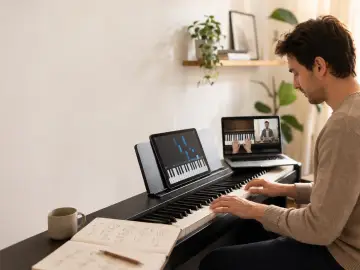
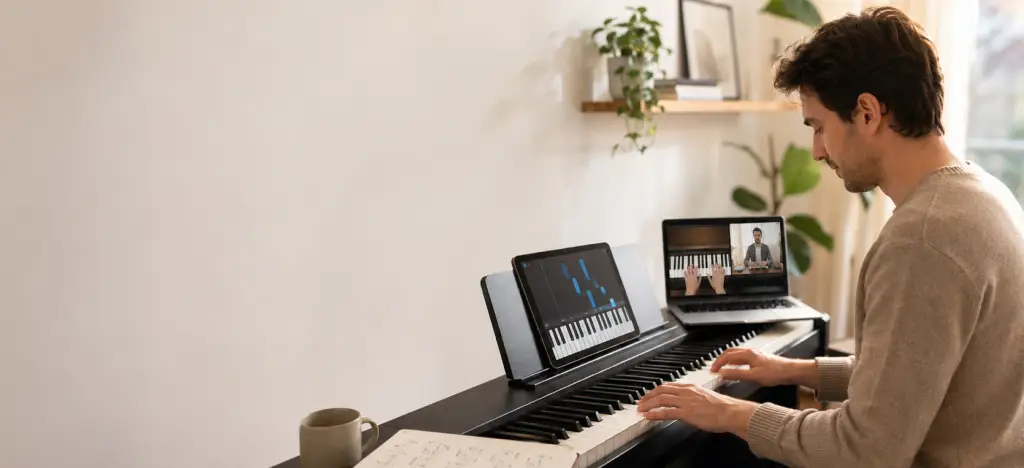
Learning piano used to mean one thing: find a teacher, buy a book, practise scales, and hope you didn’t give up before anything sounded good. That was pretty much what happened to me.
Not anymore.
Today, you can learn with apps, YouTube, online courses, private lessons, AI tools, sheet music, falling notes, or some messy combination of all of them.
For most beginners, the best approach is to combine a structured learning method with regular practice.
So which way actually works?
- What is the best way to learn piano as a beginner?
- Best ways to learn piano compared
- Learning piano with a private teacher
- Learning piano with apps
- Learning piano with Artie
- Learning piano with YouTube tutorials
- Learning piano with structured online courses
- What is the best way to learn piano as an adult?
- What is the best way to learn piano for kids?
- So, what is the best way to learn piano?
- Recommended reading for piano beginners
- Frequently asked questions about learning piano
- About the author
What is the best way to learn piano as a beginner?
For most beginners, the best way to learn piano is to combine guided practice with real music you actually want to play.
That might mean using a piano app like Artie for daily practice, following a structured course to understand chords and technique, and occasionally using YouTube for extra inspiration.
Private lessons are still one of the strongest options if you want personal coaching, but they are not the only serious route anymore. A good piano app or online course can help you start, build confidence, and make practice feel less intimidating.
Best ways to learn piano compared
Method | Best for | Pros | Cons |
|---|---|---|---|
Private piano lessons | Personal coaching and long-term progress | A teacher can correct your technique directly | Expensive and less flexible |
Piano learning apps | Beginners, kids and regular practice | Easy, visual and motivating | Feedback varies by app |
Artie AI piano teacher | Beginners who want interactive song practice | Wait Mode, looping, hand-by-hand practice and feedback | Currently only available on iOS |
YouTube tutorials | Free song tutorials and quick explanations | Huge choice and no cost | No structure or personal feedback |
Structured online courses | Learners who want depth and musical understanding | Proper lessons from expert teachers | No instant correction while you play |
Learning piano with a private teacher
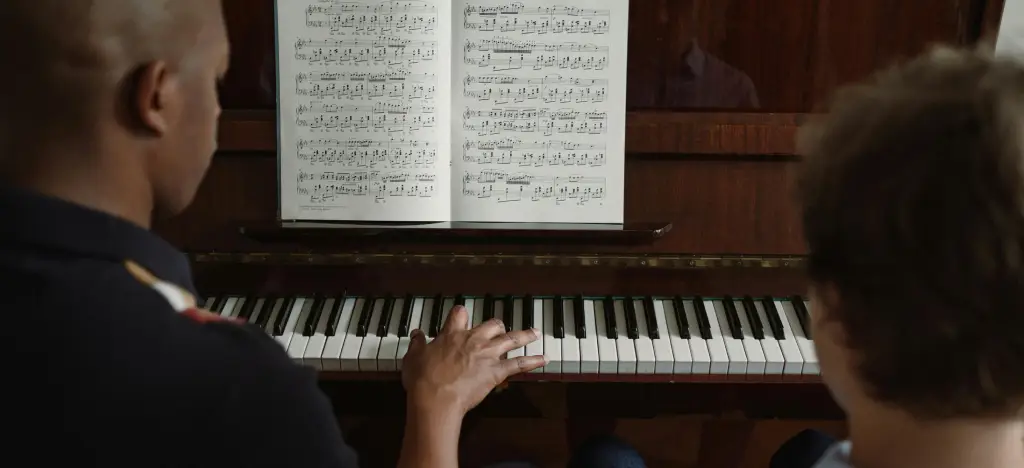 Private lessons are still the classic way to learn piano, and for good reason.
A good teacher can see things an app cannot. They can notice your posture, your hand shape, your rhythm, your tension, your sound, and the small bad habits you do not realise you are building. They can also adapt the lesson to you in real time.
That kind of feedback matters. Research on deliberate practice has repeatedly shown that focused practice works best when it includes clear goals, concentration and useful feedback - which is exactly where a good teacher can help.
Piano is physical. It is not just a matter of pressing the right keys. How you move, how you relax, how you use your hands, and how you listen all affect the way you play.
Private lessons are especially useful if you want to:
prepare for exams
learn classical repertoire
fix technique problems
get serious about performance
receive detailed personal feedback
build strong habits from the beginning
The downside is obvious. Lessons cost money. You need to schedule them. You may feel pressure. And not every teacher is right for every learner.
A brilliant teacher can change everything. A bad match can make piano feel like homework with a metronome.
If you're looking for the quickest route to strong technique and personalised feedback, private lessons are still hard to beat. For beginners who need more flexibility or a lower-cost option, a piano app or online course may be a better place to start.
✅ Best for: learners who want personal guidance
⚠️ Not ideal for: people who need flexibility, low cost or a gentler way to start
Learning piano with apps
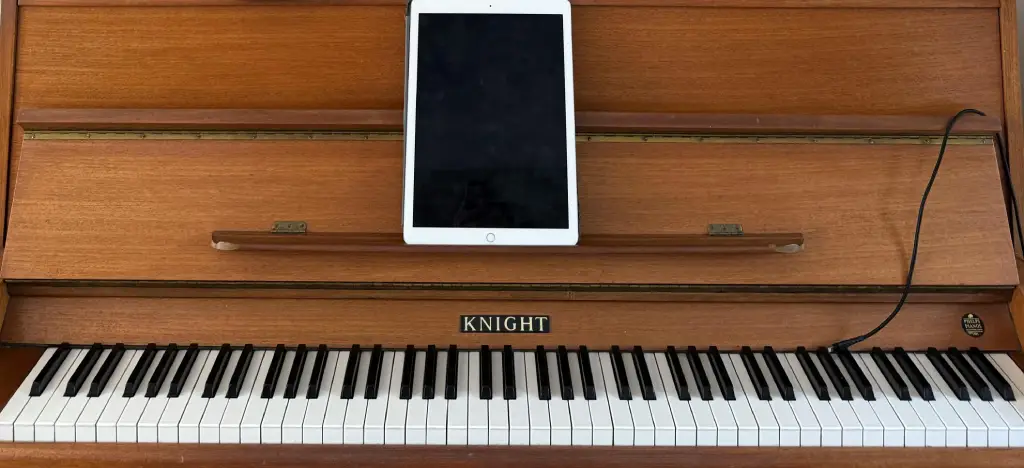 Piano learning apps have become one of the most popular ways to start. They make piano feel less formal, less intimidating and more immediate.
Instead of opening a music book and trying to decode notation, you can follow visual notes, play along with songs, and get some form of response from the app as you play.
That is useful, especially in the early stages.
Apps are good at helping beginners build momentum. They remove the blank-page feeling. They give you something to do. They make practice feel more like a game, which can be a good thing when you are just trying to build a habit.
Popular piano apps usually focus on:
visual learning
song-based practice
progress tracking
short daily sessions
beginner-friendly lessons
basic note and rhythm recognition
But not all piano apps are the same. Some feel like games. Some feel like digital songbooks. Some are closer to structured lessons. Others focus more on practice support.
The real question is not “Which app has the most songs?” It is:
Which app actually helps you practise better?
Not all piano apps take the same approach, which is why it's worth looking at what makes Artie different.
✅ Best for: beginners, kids and people who need motivation
⚠️ Not ideal for: learners who want detailed human feedback from day one
💡 ARTMASTER TIP: If you’re comparing piano apps, read our guide to the best piano learning apps to see how Artie compares with Simply Piano, Flowkey and Yousician.
Learning piano with Artie
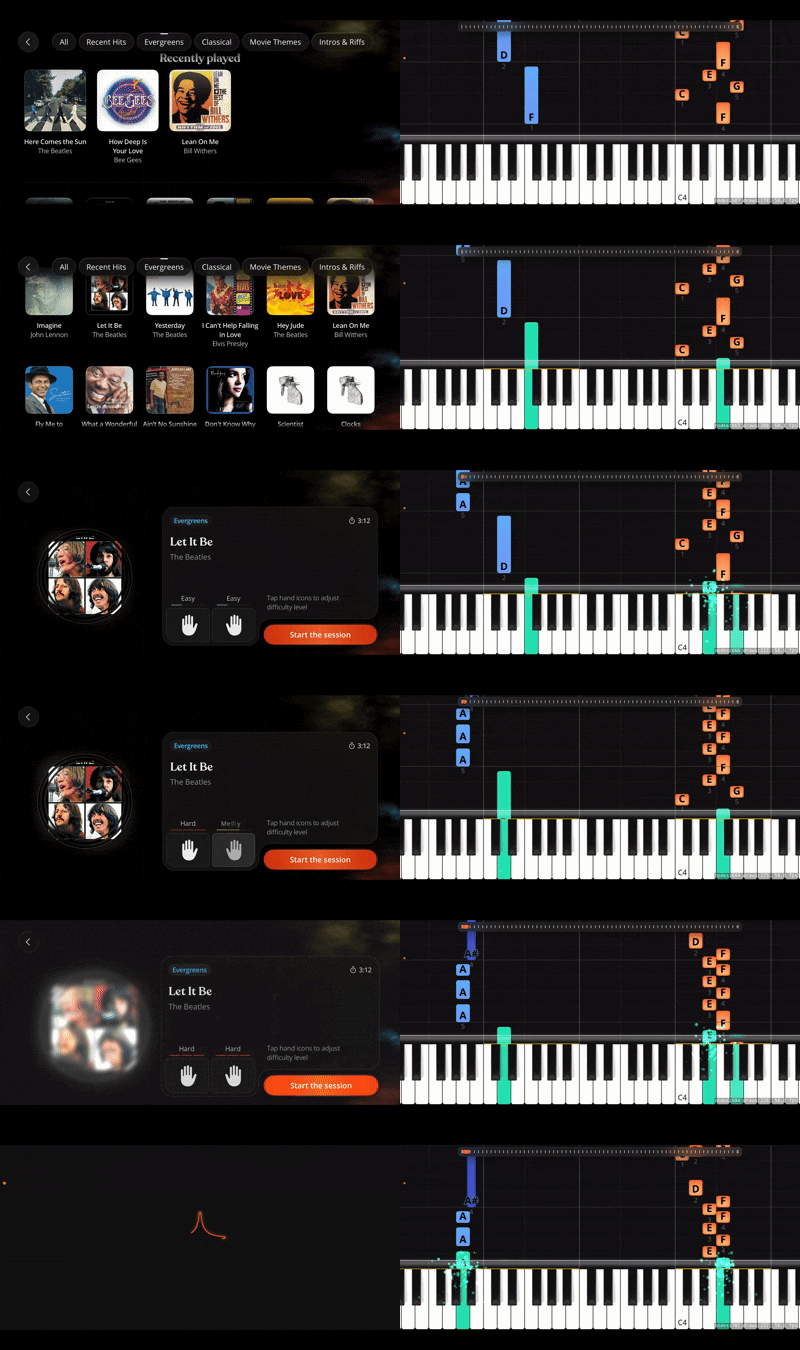 Artie is ArtMaster’s AI piano teacher, designed for beginners who want a more interactive way to practise piano.
You play inside the app, follow the music visually, practise one hand at a time, loop tricky sections, and use Wait Mode so the song waits until you play the right note.
That matters because beginners often struggle less with understanding what to do and more with keeping up. Artie gives you time to find the note, play it, and move on without the whole song falling apart.
Artie is especially useful if you want to:
learn real songs without reading sheet music from day one
practise left hand, right hand, then both together
repeat difficult sections instead of restarting the whole song
use different difficulty levels for each hand
get an evaluation after practice
build confidence through short, focused sessions
Artie currently includes 100+ songs with three difficulty levels for each hand. It is best for iOS users with a piano or keyboard. For the smoothest experience, a 61-key keyboard or larger is recommended, although some simpler songs may work on smaller keyboards.
Why choose Artie?
Wait Mode gives you time to find the right note
Loop Mode helps you fix tricky sections
Hand-by-hand practice makes songs easier to learn
End-of-practice feedback shows what to improve
You can start without reading sheet music
✅ Best for: beginners, returning adults, song-based learners and people who want guided practice
⚠️ Not ideal for: Android users right now, advanced classical players, or learners who specifically want traditional notation-first training
💡 ARTMASTER TIP: Want to start without reading sheet music? Read our guide to learning piano without sheet music for a practical look at visual learning, chords and song-based practice.
Learning piano with YouTube tutorials
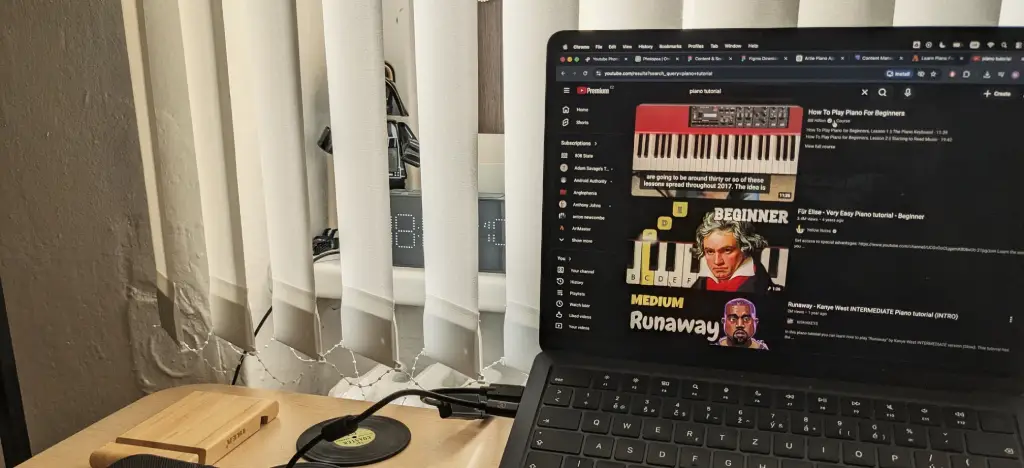 YouTube is usually the first place people go when they want to learn piano for free.
That makes sense. It has tutorials for almost everything:
pop songs
film music
chord progressions
beginner exercises
music theory
technique tips
The problem is not lack of content. The problem is knowing what to do with it.
YouTube is not a curriculum. It does not know what you played yesterday. It cannot tell you that your timing is drifting, your left hand is too heavy, or you are skipping the boring-but-necessary bit because the next video looks more fun.
That is why many people learn a few intros, a few chords, maybe half a song, and then stall.
YouTube is useful if you already know what you are looking for. It is much less useful if you need a clear path.
✅ Best for: free tutorials, quick explanations and inspiration
⚠️ Not ideal for: beginners who need structure, feedback and a practice plan
Learning piano with structured online courses
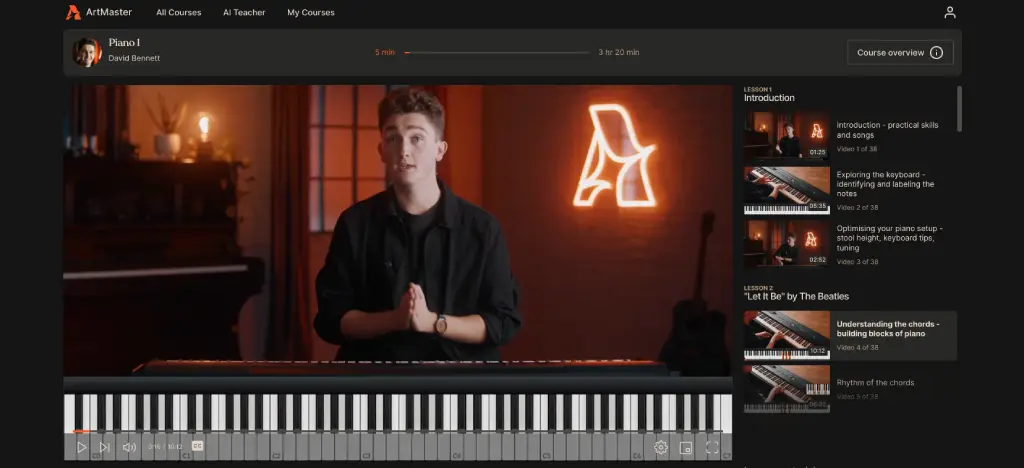 Structured online courses sit somewhere between YouTube and private lessons.
They are less random than YouTube because the lessons are organised properly. They are more flexible than private lessons because you can watch them whenever you want.
A good course can help you understand:
chords
rhythm
scales
harmony
technique
how songs are built
This is where ArtMaster’s piano courses are useful. David Bennett’s piano and music theory courses, for example, are designed to help you understand what you are playing, not just copy notes on a screen.
Apps can help you practise. Courses can help you understand.
The ideal setup for many learners is not choosing one or the other. It is using both. You might use Artie for daily interactive practice, then use a structured course when you want to understand the theory or technique behind what you are playing.
✅ Best for: independent learners who want proper teaching and musical depth
⚠️ Not ideal for: people who need instant correction while they play
What is the best way to learn piano as an adult?
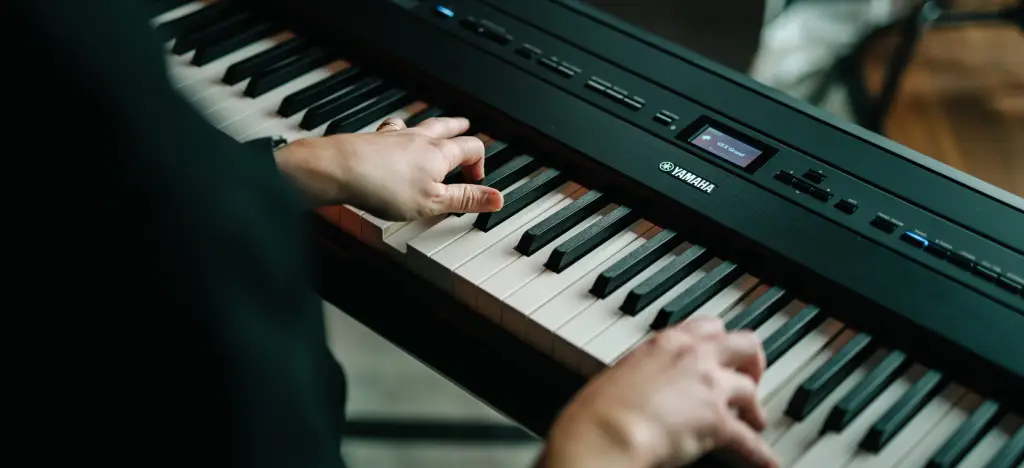 For adults, the best way to learn piano is usually the one that respects real life.
You may not have an hour every day. You may not want exams. You may not want to start with children’s songs. You may also have an old memory of piano lessons feeling strict, slow or embarrassing.
So the best method is often a flexible one.
For many adults, that means combining:
Artie for regular guided practice
an online course for deeper understanding
YouTube for quick explanations
occasional teacher feedback if needed
The key is to make practice feel possible. Ten focused minutes most days is better than one heroic two-hour session every three weeks.
Artie is a good fit for adult beginners because it lets you practise at your own pace, use Wait Mode, repeat difficult sections, and start with real songs instead of feeling trapped in a beginner book forever.
💡 ARTMASTER TIP: Starting later than you planned? Read our guide to learning piano as an adult for realistic practice advice, confidence tips and ways to make progress without turning music into homework.
What is the best way to learn piano for kids?
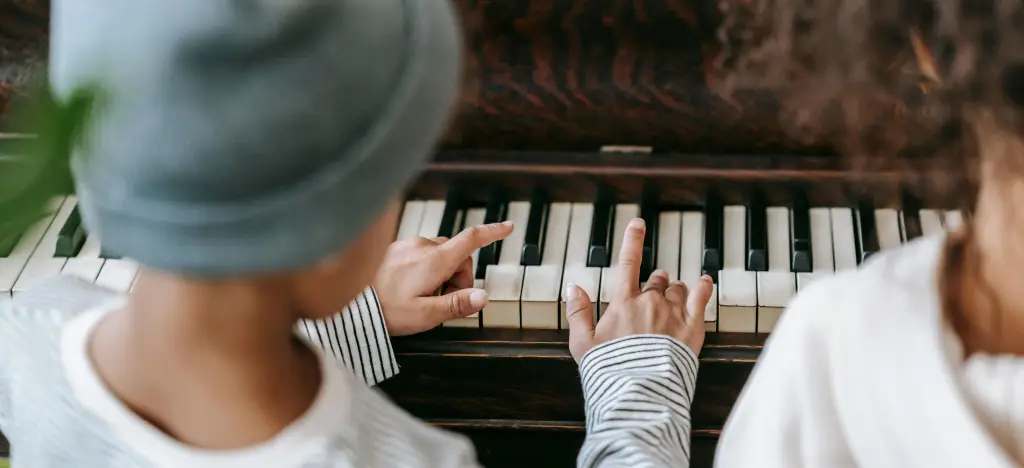 Children often learn best when practice feels immediate, visual and rewarding.
That is why piano apps can work well for kids. Falling notes, colours, short challenges and progress markers can make practice feel more like play. And that is not a bad thing. If a child is willingly going back to the keyboard, the method is doing something right.
There is also research suggesting that music training can support children’s executive functions, including working memory, inhibitory control and cognitive flexibility. In other words, learning music is not only about playing songs - it can also help children practise attention, memory and self-control.
For many families, the best setup is a mix:
an app for daily motivation
a teacher or course for structure
songs the child recognises
short, regular practice sessions
Artie can work well for children because it feels game-like while still involving real piano playing. They follow the notes, play the keys, practise one hand at a time, and build confidence through repetition.
The trick is not to make piano feel like another school subject.
So, what is the best way to learn piano?
There is no single best method for everyone.
Choose based on what you actually need:
Need personal feedback? Try a teacher.
Need something free? Start with YouTube.
Need structure and depth? Take an online course.
Need daily practice motivation? Use a piano app.
Need beginner-friendly song practice with feedback? Try Artie.
The mistake is thinking you have to choose only one.
A beginner might use Artie to practise songs during the week, follow a David Bennett course to understand chords and theory, and use YouTube when they want a quick explanation or burst of inspiration.
That is probably the most realistic way to learn piano now.
Piano is not learned by collecting resources. It is learned by sitting down, trying again, making mistakes, fixing one small thing, and coming back tomorrow.
The best way to learn piano is the one that gets you to do that.
Recommended reading for piano beginners
Frequently asked questions about learning piano
Can you teach yourself piano?
Yes. Many people successfully teach themselves piano using apps, online lessons and books. The key is following a structured plan and practising consistently. Learning on your own gives you the flexibility to work at your own pace, while a teacher can provide personalised feedback and help you correct mistakes more quickly. Many beginners find that combining an app with occasional lessons gives them the best of both worlds.
Is it better to learn piano with an app or a teacher?
Neither is automatically better – it depends on your goals. A piano teacher is ideal if you want regular feedback, prepare for exams or develop advanced technique. Piano learning apps are often a better choice for beginners who want flexible practice, lower costs and the freedom to learn whenever they have time. Many learners use both together.
Is YouTube a good way to learn piano?
YouTube is an excellent free resource, but it doesn't provide structure or feedback. It's easy to jump between tutorials without building the skills you need. Many beginners use YouTube alongside a piano app or course to create a more organised learning experience.
Can adults learn piano?
Absolutely. Adults often progress quickly because they are more patient and motivated than younger learners. While children may pick up certain physical skills more easily, adults usually benefit from better concentration and study habits. It's never too late to start learning piano.
Can I learn piano without reading sheet music?
Yes. Many beginners start by learning songs using visual methods such as falling notes before learning traditional notation. Learning to read sheet music is still worthwhile in the long term, but it doesn't have to be the first step.
Can I learn piano on a keyboard instead of a piano?
Yes. A digital piano or touch-sensitive keyboard is a great way to learn. Many beginners start on a keyboard before moving to an acoustic piano later. If possible, choose an instrument with weighted keys to develop good technique.
How often should beginners practise piano?
Short, regular practice sessions are usually more effective than occasional long ones. Around 15–30 minutes a day is enough for most beginners to make steady progress. The most important thing is practising consistently rather than trying to fit everything into one session each week.
What is the fastest way to learn piano?
The fastest way to improve is to practise regularly using a structured method. Focus on one or two pieces at a time, play slowly, repeat difficult sections and gradually increase the tempo. Whether you learn with an app, a teacher or online lessons, consistent practice matters far more than the method you choose.
What is the best way to learn piano at home?
For most beginners, the best approach is to combine regular practice with structured guidance. A piano learning app can help you build a routine, online videos are useful for extra tips, and occasional lessons with a teacher can help you overcome difficult problems. The method you enjoy enough to stick with is usually the one that leads to the best results.
About the author
Matt Ford is a musician, teacher, writer, and lifelong student of sound.
With years of experience in both performing and teaching, he shares practical advice through ArtMaster to help musicians at every level build skill and confidence in their playing.