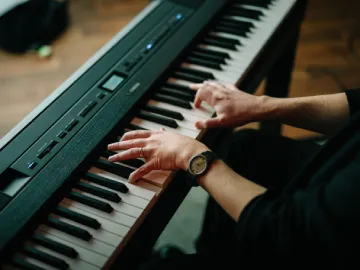
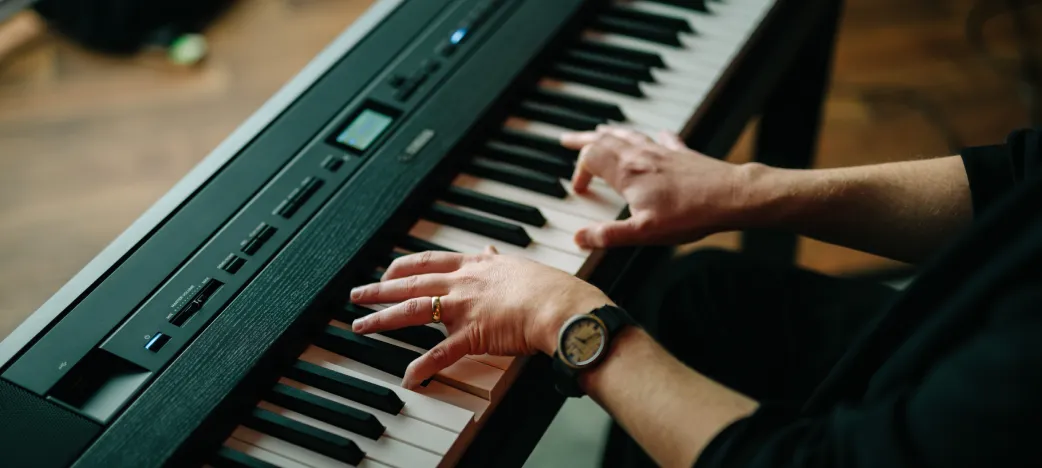
If you’re buying your first keyboard or digital piano, the main question is simple: what should you actually get?
For most beginners, I’d narrow it down to a few sensible choices.
If you want a proper piano-learning setup, the Roland FP-10 is probably the safest first pick. It has 88 weighted keys, a realistic feel and enough quality to last well beyond the first few months.
If you want something similar but usually a little cheaper, look at the Casio CDP-S110. It gives you 88 weighted keys in a slim, simple body, without turning the whole thing into a major financial event.
If you want something cheaper and more portable, go for the Yamaha PSR-E383 or Casio CT-S1. These are 61-key touch-sensitive keyboards. They won’t feel like a proper digital piano, but they are good enough for learning beginner songs, chords and basic hand coordination.
- Keyboard vs digital piano: what’s the difference?
- What features matter most?
- What keyboard works best with Artie?
- Best keyboards and digital pianos for beginners in 2026
- Common buying mistakes
- Can you learn piano without reading sheet music?
- Final verdict
- Learn piano the right way
- FAQs: Digital piano vs keyboard
Here are the quick picks:
Best for... | Recommended model |
|---|---|
Best overall first piano | Roland FP-10 |
Best budget weighted digital piano | Casio CDP-S110 |
Best cheap beginner keyboard | Yamaha PSR-E383 |
Best simple portable keyboard | Casio CT-S1 |
Best slim piano-style keyboard | Yamaha NP-15 |
Best lightweight 88-key option | Korg Liano |
Best step-up digital piano | Roland FP-30X |
If you’re learning with Artie, ArtMaster’s AI piano teacher, any of these can work. The better the instrument feels and the clearer it sounds, the easier practice becomes. MIDI or USB connection is useful where available, but you don’t need to overcomplicate things before you’ve even played your first song.
Now let’s look at why these choices make sense.
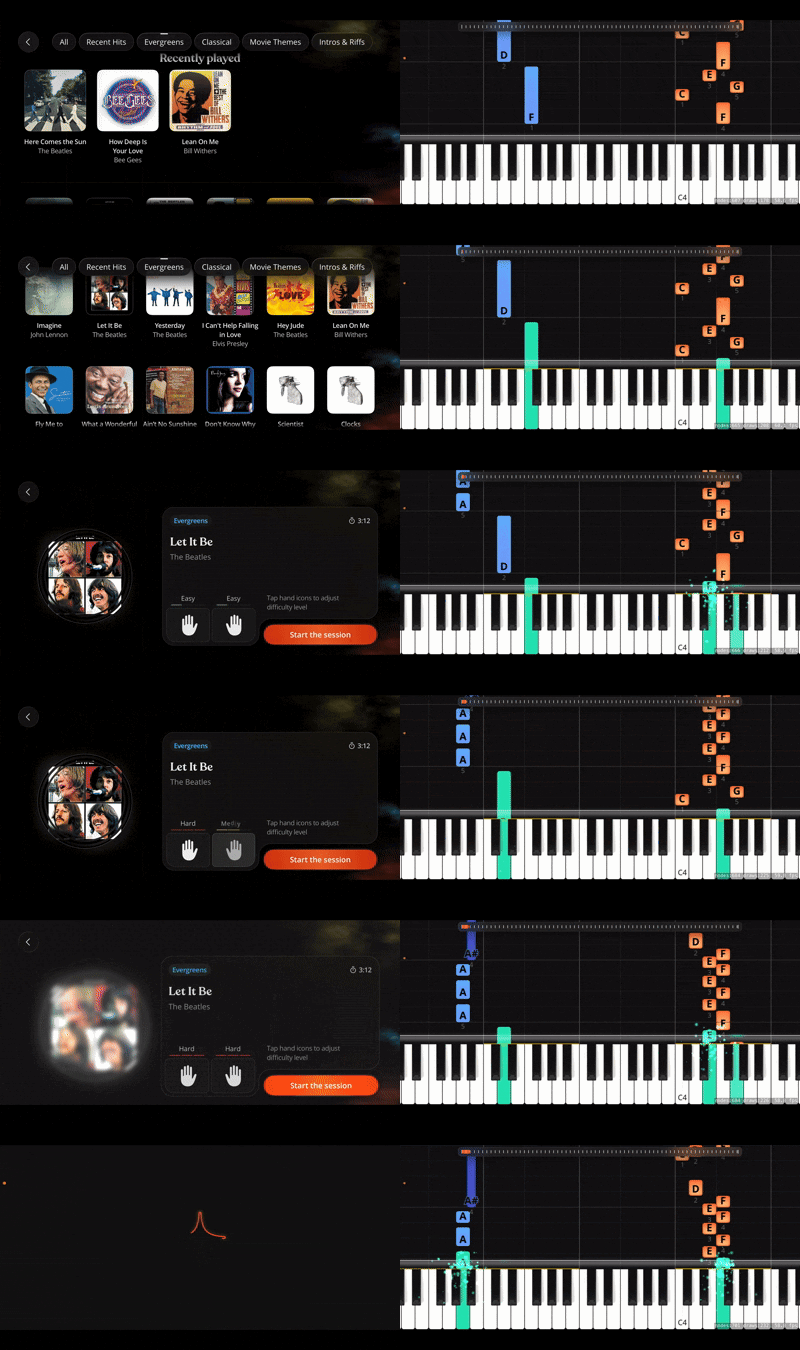 💡 Want to learn piano songs today?
Meet Artie — the world’s first AI piano teacher that actually listens to your playing and gives real-time feedback to help you improve faster.
Download Artie for free now
Keyboard vs digital piano: what’s the difference?
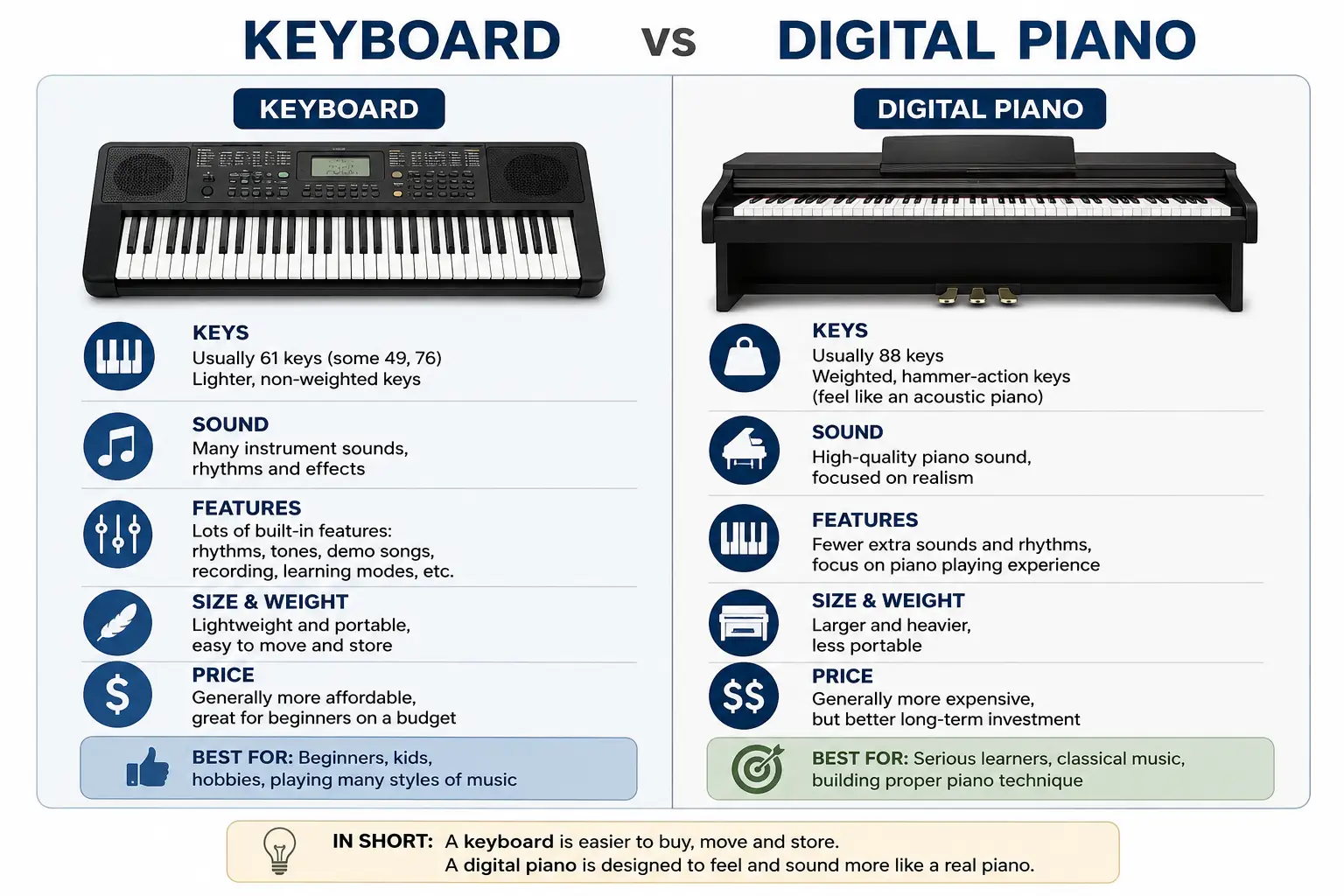 A keyboard is usually lighter, cheaper and more portable. It often has 61 keys, built-in sounds, rhythms and extra features. Some are excellent for beginners. Others feel more like toys with a volume knob.
A digital piano is built to feel closer to an acoustic piano. It usually has 88 keys, weighted action and a more realistic piano sound. It is less portable than a basic keyboard, but much better if you want to learn piano properly over time.
The simplest way to think about it is this:
A keyboard is easier to buy, move and store.
A digital piano is better for learning piano technique.
💬 Ask ChatGPT: Whats the best way to learn piano at home?
What features matter most?
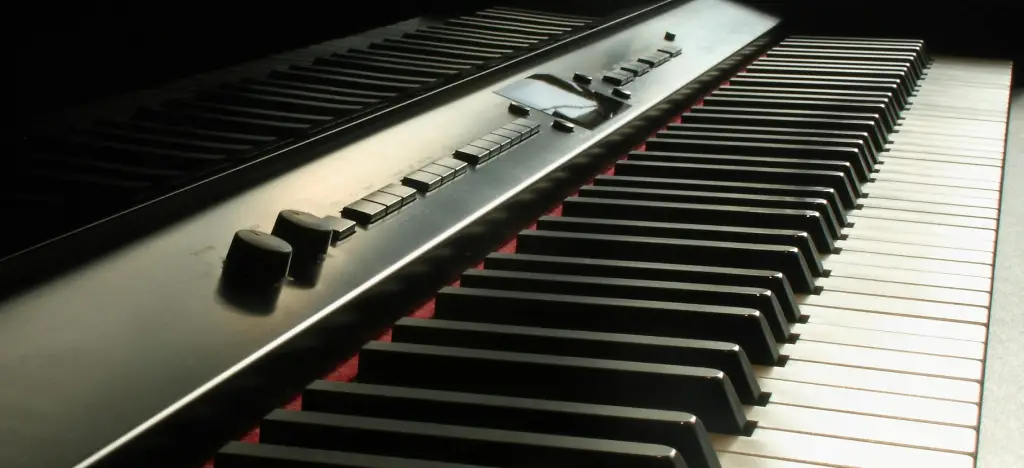 Beginner keyboards are often advertised with the least useful details: hundreds of sounds, built-in rhythms, demo songs and flashing buttons.
Most of that is not important.
Here’s what actually matters.
Full-size keys
Full-size keys match the spacing of a real piano. That helps your fingers learn where things are.
Mini keys can be fine for young children, but for adults they usually feel cramped.
Touch sensitivity
Touch sensitivity means the keyboard responds to how hard you play.
Press gently and the note is quieter. Press harder and it gets louder.
This is essential. Without it, your playing sounds flat and mechanical. If you’re buying a budget keyboard, don’t skip this.
Weighted keys
Weighted keys feel closer to an acoustic piano. They give your fingers resistance and help you build control.
You can start without them, but if you want a more realistic piano-learning experience, weighted keys are worth it.
Sustain pedal input
A sustain pedal lets notes ring out after you lift your fingers. You may not use it much at the start, but you’ll want it once you begin playing real songs.
Headphone output
Headphones make practice easier to fit into real life. You can play without turning every beginner mistake into a household announcement.
USB or MIDI
USB or MIDI can help you connect your instrument to apps, computers or recording software. It can also improve note detection with some learning apps, including Artie where supported.
It’s not the first thing I’d worry about, but it is useful.
💡 ARTMASTER TIP: Did you know that a recent study found that one instrument in particular — the piano — appeared to have the most benefits. Find out more about how learning music benefits the brain and body.
What keyboard works best with Artie?
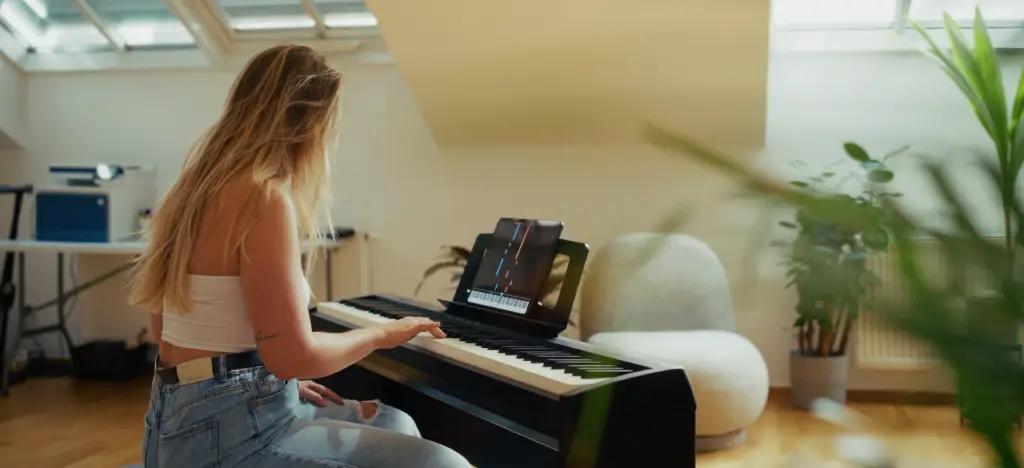 Artie works with a keyboard or digital piano, but the experience is better when the instrument is easy to hear and comfortable to play.
A digital piano such as the Roland FP-10, Casio CDP-S110 or Roland FP-30X is ideal if you want a proper piano feel. A 61-key keyboard such as the Yamaha PSR-E383 or Casio CT-S1 is fine if you want a cheaper way to begin.
If you’re using microphone recognition, keep your phone or tablet close enough to the instrument and make sure the microphone is not blocked. If you practise with headphones, the app may not be able to hear the keyboard unless you connect another way.
The point of Artie is that you’re not just left alone with a new instrument wondering what to do next. You can choose a song, practise one hand at a time, use wait mode, loop tricky sections and get feedback after practice.
That is useful because the first problem beginners face is often not the keyboard itself. It’s knowing what to do once they sit in front of it.
💡 ARTMASTER TIP: Curious about learning piano with AI? Read my full Artie piano app review to see how the app works in practice.
Best keyboards and digital pianos for beginners in 2026
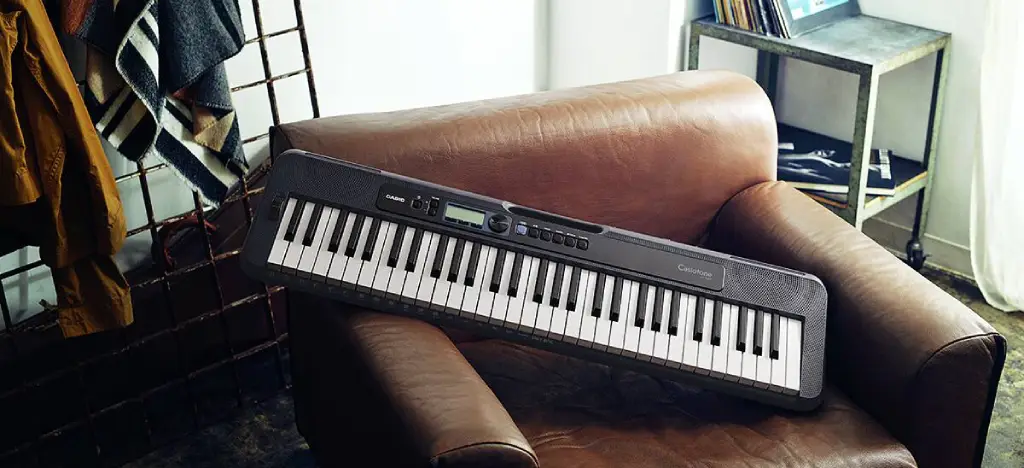 Models change, prices move around and availability depends on where you live. But these are sensible beginner options to look at now.
➡️ Roland FP-10 — best overall first piano
The Roland FP-10 is my strongest general recommendation for an adult beginner who wants to learn properly.
It has 88 keys, Roland’s PHA-4 Standard keyboard and a realistic piano feel. It is still fairly compact, but it feels much more like a real instrument than a basic portable keyboard.
Choose this if you want a proper digital piano without spending too much.
➡️ Casio CDP-S110 — best budget weighted digital piano
The Casio CDP-S110 is a good alternative if you want 88 weighted keys in a slim, affordable body.
It is simple, compact and focused on the basics. It doesn’t feel as substantial as more expensive digital pianos, but it gives beginners the most important thing: a full-size weighted keyboard.
Choose this if you want a budget digital piano that does the job without fuss.
➡️ Yamaha PSR-E383 — best cheap beginner keyboard
The Yamaha PSR-E383 is a strong low-cost keyboard for beginners.
It has 61 touch-sensitive keys, built-in speakers, headphone output, sustain pedal input and USB audio/MIDI. It is not a digital piano, so the keys are lighter, but it is a far better starting point than a toy-like keyboard with no touch response.
Choose this if you want an affordable keyboard with proper beginner features.
➡️ Casio CT-S1 — best simple portable keyboard
The Casio CT-S1 is a good choice if you want something clean, portable and easy to live with.
It has 61 touch-sensitive keys, built-in speakers and a simple design that doesn’t overwhelm you with buttons. It also looks more like something you’d actually want in your home.
Choose this if you want a straightforward portable keyboard that feels more grown-up.
➡️ Yamaha NP-15 — best slim piano-style keyboard
The Yamaha NP-15 sits somewhere between a keyboard and a digital piano.
It is slim, light and more piano-focused than many portable keyboards. It does not have weighted keys, so it won’t feel like a digital piano, but it is a nice option if you want something tidy and simple.
Choose this if you want a lightweight instrument with a piano-first feel.
➡️ Korg Liano — best lightweight 88-key option
The Korg Liano gives you 88 keys in a very slim, light body.
The trade-off is that it does not feel like a traditional weighted digital piano. But if you want the full range without the size and weight of a heavier instrument, it makes sense.
Choose this if you want 88 keys but need something unusually portable.
➡️ Roland FP-30X — best step-up digital piano
The Roland FP-30X is a stronger long-term option than the FP-10 if your budget allows.
It has 88 weighted keys, better speakers and a fuller feature set. It is still beginner-friendly, but it feels more like something you could keep for years.
Choose this if you already know you’re serious and want to avoid upgrading too soon.
Which one would I buy?
If I were buying for an adult beginner, I’d choose the Roland FP-10.
It gives you the proper piano feel without making the whole decision too expensive or complicated.
If the budget were tighter, I’d choose the Casio CDP-S110.
If I wanted a cheaper keyboard rather than a digital piano, I’d choose the Yamaha PSR-E383 for value or the Casio CT-S1 for simplicity.
That’s the practical split:
Want to learn piano properly? Roland FP-10
Want weighted keys for less? Casio CDP-S110
Want the cheapest sensible start? Yamaha PSR-E383
Want simple and portable? Casio CT-S1
Everything else depends on budget, space and taste.
💡 ARTMASTER TIP: Once you’ve chosen your keyboard or digital piano, the next step is choosing something you actually want to play. I’ve put together a list of 20 beginner-friendly piano songs that are simple enough to start with, but still feel like real music.
Common buying mistakes
 The biggest mistake is buying the instrument that looks impressive online rather than the one that feels good to play.
Avoid these traps.
Buying mini keys by accident
Mini keys are usually a bad idea for adults learning piano. They make hand spacing feel different from a real keyboard.
Choosing a keyboard with no touch sensitivity
This is the one feature I would not compromise on. Without touch sensitivity, you can’t control volume properly.
Caring too much about extra sounds
You mostly need one good piano sound. Extra sounds are fun, but they won’t save a bad keyboard.
Forgetting the stand and stool
A good keyboard on a wobbly stand with a random dining chair is still a bad setup. Comfort matters more than people think.
Spending too much too soon
You don’t need to prove you’re serious by buying a huge digital piano before you’ve played your first song. Buy something good enough to support the habit.
What else do you need?
A beginner setup does not need to be complicated.
You’ll probably want:
a stable stand
an adjustable stool or bench
headphones
a sustain pedal
a phone or tablet stand if you’re using Artie
enough space to sit comfortably
The most useful setup is one that’s ready to play. If your keyboard lives in a cupboard, it will probably stay there. If it’s out, plugged in and waiting, you’re more likely to practise.
That sounds obvious because it is. It’s also how habits work.
Can you learn piano without reading sheet music?
Yes. You can start learning piano without reading sheet music.
Sheet music is useful, but it does not have to be the first step. Many beginners start with falling notes, chord symbols, video lessons, ear training or app-based guidance.
For some people, especially adults who had stiff formal lessons years ago, that can be a better way back in. You play first. You understand more later.
Artie is built around that more direct route. You choose a song, practise it in sections, work on one hand at a time and build from there. You can learn theory and notation later if you want. You don’t need to make sheet music the bouncer at the door.
💡 ARTMASTER TIP: You don’t need to read sheet music to start playing. Here’s what you can do instead.
Final verdict
If you want the best beginner instrument for learning piano, buy a Roland FP-10.
If you want a cheaper weighted-key option, buy a Casio CDP-S110.
If you want a lower-cost keyboard, buy a Yamaha PSR-E383 or Casio CT-S1.
The instrument matters, but don’t turn the decision into a reason not to start. Choose something decent, put it somewhere you can reach it, open Artie, pick a song and play the first few notes.
That’s where it starts.
Learn piano the right way
Want to make sure you're learning with the best tools and the right technique from day one?
Try David Bennett’s Piano for Beginners course on ArtMaster for free.
Try Our FREE 7-Day Trial!
FAQs: Digital piano vs keyboard
What is the best keyboard to learn piano?
The best overall beginner choice is a digital piano such as the Roland FP-10. If you want a cheaper portable keyboard, the Yamaha PSR-E383 or Casio CT-S1 are good starting points.
Is a keyboard good enough to learn piano?
Yes. A 61-key touch-sensitive keyboard is good enough to start learning notes, chords, rhythm and beginner songs. A digital piano is better if you want to develop proper piano technique.
Is 61 keys enough for beginners?
Yes. A 61-key keyboard is enough for many beginner songs and exercises. For long-term piano learning, 88 keys are better.
Do beginners need weighted keys?
Not immediately, but weighted keys are better if you want a realistic piano feel. They help with control, strength and expression.
What is the best keyboard for Artie?
Artie works well with a digital piano or a touch-sensitive keyboard. The Roland FP-10, Casio CDP-S110, Yamaha PSR-E383 and Casio CT-S1 are all sensible options, depending on your budget.
Do I need MIDI for Artie?
No, not always. Artie can use microphone recognition, but MIDI or USB connection may improve note detection where supported.
Can I learn piano without sheet music?
Yes. You can start with falling notes, chord symbols, song tutorials or app-based guidance, then learn notation later if you want.
About the author
Matt Ford is a musician, teacher, writer, and lifelong student of sound.
With years of experience in both performing and teaching, he shares practical advice through ArtMaster to help musicians at every level build skill and confidence in their playing.